Showing posts with label soup. Show all posts

Monday, July 8, 2013

Deconstructed Chłodnik

Chłodnik is a Polish cold beet soup along the lines of a cold borscht (борщ) that comes to my mind each year when the first beets arrive just as the weather is turning miserably hot and humid. You can see the shockingly pink soup in all its glory in this post, garnished with hard-boiled egg, dill, and diced beets.

In very recent days, we have done a deconstructed version of this soup for our nightly Chef's Whim tasting menu, a version that customers have raved about.

Traditional chłodnik (where "traditional" means "what my grandmother used to make" and varies quite naturally from person to person) is roughly made from beets, sour pickles, cucumbers, dill, and some form of tart dairy product, such as buttermilk. That said, it's a soup and I'm certain that very few cooks follow a formal recipe and each batch will contain whatever ingredients are at hand.

Deconstructed Chłodnik: Dill Pickle Soup with Pickled Beet Sorbet

For our tasting, we pulled the soup and the beets apart. Our soup is Greek yogurt, cornichons, cornichon brine, water, cucumber, dill, and just enough honey to tame the vinegar and yogurt. Once it comes out of the blender, it almost tastes like a refreshing dill pickle soup.

The beets we roasted, pickled for 48 hours, and blended very fine with the pickling liquid and then put in the ice cream machine to make a sorbet.

Final plate up is the yogurt soup base down in the bowl, then we scatter around chopped cornichons, chopped hard-boiled egg, dill fronds, and smoked sablefish. In the very center, we place a quenelle of the pickled beet sorbet and top that with a cucumber-tasting borage flower from my garden.

Tuesday, March 26, 2013

Northern Italian Tasting

We're generally not in the habit of having customers dictate the direction of our tasting menus, preferring instead to take the best ingredients we have on hand at the time and shape them into a menu based on our own whims. But our customer for this dinner was insistent that we do a tasting of the foods from the provinces of Northern Italy. OK. I would have gone to a Northern Italian restaurant for this, but never mind, we can cook pretty much anything.

The hardest part of this whole exercise was deciding the order of the courses; for example, would the Piemontese course be primo, a secondo, a dolce? Once we got the ordering of the courses, progressing from first courses to seafood to meat to sweets, then it was easy enough to draw inspiration from each region to fill in the details.

Chicken Liver "Crostino"
Toscana: Chicken Liver Crostino. Chicken liver crostini are some of the best known appetizers in Tuscany and since we had chicken livers on hand, we decided to do a take on this well known primo, but reinvent the form. We cooked the livers in the traditional manner with onions, sage, rosemary, capers, anchovies, and Cognac. Then we formed the liver mousse into truffles and rolled them finely powdered crostini, cocoa powder, and espresso powder. The bitter cocoa and espresso worked with the liver very nicely.

Speck Knödel/Canederli Tirolese
Alto Adige: Speck Knödel/Canederli Tirolese. We went back and forth on a soup course, but the weather by turning cold and nasty made the decision easy for us. I have always loved the bread dumpling soups of Bavaria, Austria, and the Südtirol and wanted to reprise them for this menu, to show the Germanic influences in the cuisine of Alpine Italy. I made a classic brown stock from both pork and chicken necks and then poached quenelles of knödel batter in it. The batter is white bread soaked in milk, garlic chives, sage, minced speck, and eggs.

Gambero al Prosecco
Veneto: Gambero al Prosecco. I wouldn't argue if you wanted to call this Shrimp and Grits because that is basically what it is. This is our take on the classic Venetian dish of Schie con Polenta, tiny head-on shrimp in a garlic butter sauce over creamy polenta. Making the sauce with Prosecco is a nod to the famous sparking wine of the Veneto.

Trofie al Pesto
Liguria: Trofie al Pesto. You just can't think of Liguria and Genoa without thinking of basil and that most famous of sauces, pesto. What snaps immediately into my mind is a big plate of the local pasta, trofie, in pesto sauce. Plates of pasta just don't look all that pretty on tastings, so we mixed the trofie and pesto with some ricotta and eggs and baked them in little molds so serve as a base for mussels steamed with pesto.

Grilled Trout with Fennel, Chestnuts, and Lardo
Val d’Aosta: Grilled Trout with Fennel, Chestnuts, and Lardo. Moving right up next to France and Switzerland, the next course took its cues from regional products. This dish has no basis in classic Italian cooking: it is one of my own invention, but I daresay that it would feel at home in a modern restaurant in the Val d'Aosta. We grilled trout and then served it with a sauce made from caramelized fennel, shallots, and peeled chestnuts, splashed at the last second with a touch of anisette and bound with a splash of cream. On top is a very thin sliver of house-cured lardo. This dish is a keeper and I look forward to reprising it at some future time in the main dining room.

Radicchio, Wild Mushroom, and Sausage Strudel
Friuli/Venezia Giulia: Radicchio, Wild Mushroom, and Sausage Strudel. As a student of culinary history, I am always amazed at how cuisine pays no heed to political boundaries. For example, strudel, ignoring modern country borders, can be found all over the former Austro-Hungarian empire, including the far northeast corner of Italy. We made our strudel of radicchio, wild mushrooms, and a house-made sage sausage. Although it is very tasty, radicchio goes nearly black when cooked and does not necessarily make the prettiest strudel filling.

"Osso Buco" Milanese
Lombardia: "Osso Buco" Milanese. What is more representative of the cooking of Lombardia than osso buco milanese, succulent veal shank over saffron risotto? Nothing. How do you serve it for a nine-course tasting? We like the arrancino form.

Rabbit Bolognese
Emilia Romagna: Rabbit Bolognese. Emilia Romagna, among others, has two very famous exports: prosciutto di Parma and salsa bolognese from Bologna. We decided to marry a classic salsa bolognese made of rabbit with prosciutto, by wrapping the salsa in prosciutto, to give the salsa form on the plate. It is plated with saffron aïoli and a touch of sun-dried tomato pesto.

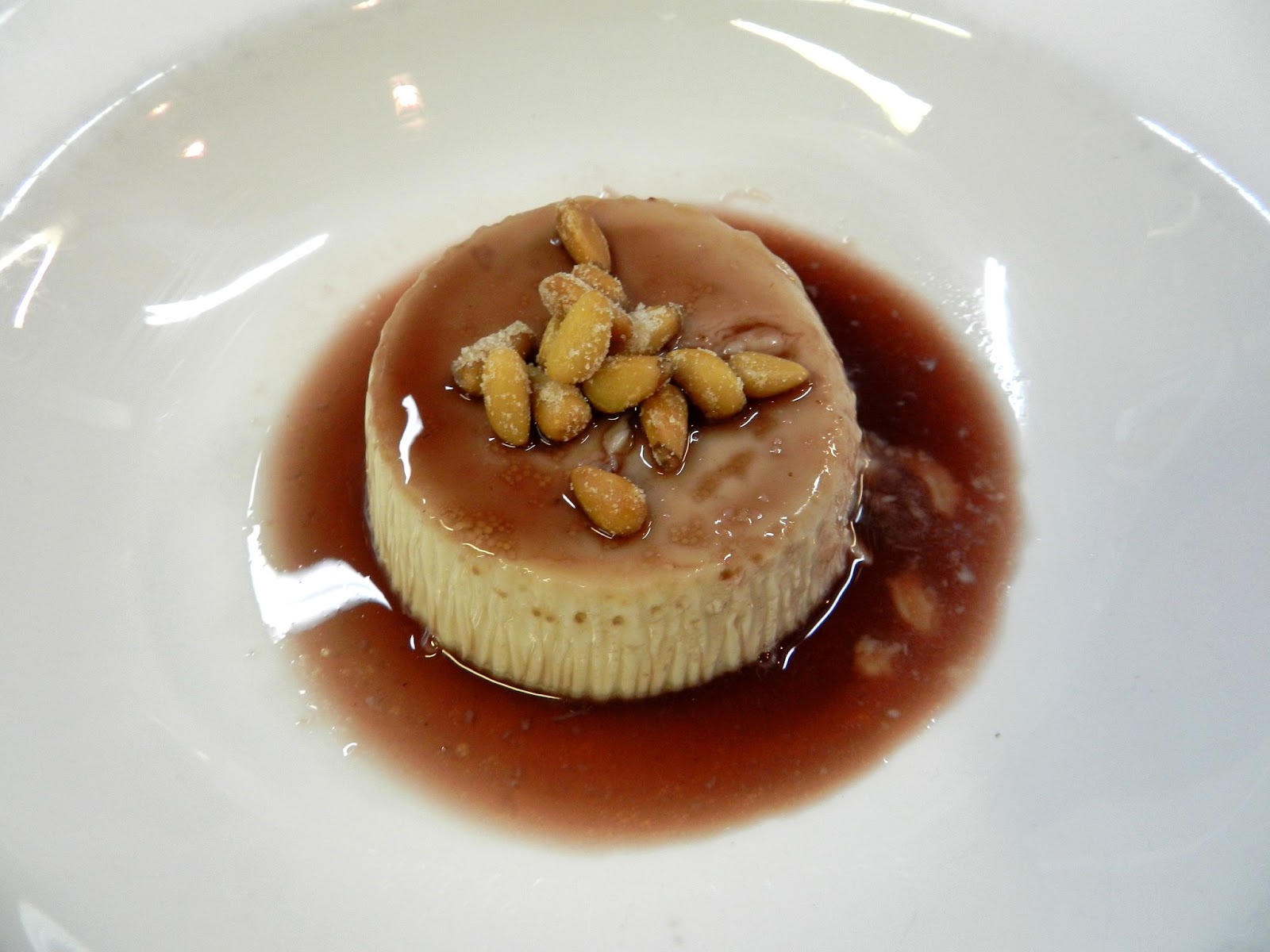
Chestnut and Red Wine Panna Cotta
Piemonte: Chestnut and Red Wine Panna Cotta. Panna cotta is a classic dish that I associate most closely with the Piemonte. This is a two-layer panna cotta of jellified Nebbiolo wine and a chestnut cream. I have gently reheated the panna cotta so that the red wine layer has just about melted, forming a sauce à la crème caramel. Topped with candied pine nuts.

Friday, September 7, 2012

Early Autumn Tasting

I know that it's not fall yet and won't be officially for another couple of weeks, but mentally, Tony and I are off creating fall menus already. As much as we love tomatoes, squash, squash blooms, and peppers, we are ready for the change to game, mushrooms, braised dishes, conserved pork products, and bacon, bacon, bacon.

Grilled Prosciutto-Wrapped Goat Cheese-Stuffed Figs

Grilled Prosciutto-Wrapped Goat Cheese-Stuffed Figs. This is not an earth shattering new dish, but it is wonderful nonetheless for having been made with local figs and local goat cheese. Next up, we're already scheming to make our own prosciutto when it gets cold enough. Served with a glass of prosecco, these are a great start to any meal.

Sausage and Eggs

Breakfast. Yet another in the long list of dishes that we have so titled, this one starts with a bed of chanterelle buttons cooked up with our bison and our venison sausages. On top is a spoonful of oeufs brouillés, duck eggs with chives and a splash of cream that have been whisked over a water bath until just set, more like a heavy sauce than traditional scrambled eggs and so, so much more sinful. Maple syrup around the edge adds a sweet note.

Truffled Steuben Yellow Eye Bean Soup; Potted Confit

Beans. Definitely my favorite dish of this whole tasting, and for being a soup, the most complex to make. My guests for this tasting are frequent diners and lovers of cassoulet, and so I worded the menu in such a way as to make them think that this course was going to be cassoulet. The beans are my favorites, Steuben Yellow Eyes, soaked overnight, drained, cooked to tender, and recooked with the juice that comes from roasting our pork belly (what we call "goodness"), mirepoix, smoked Surry sausage, garlic, thyme, bay, rosemary, and sage. It's all blitzed in the big Vita-Mix and passed through our finest chinois for an ultra-silky texture. Thinned, splashed with a touch of cream, seasoned, and lavished with a big spoonful of chopped black truffles, this is a soup for the culinary gods. Served with a croustade topped with potted confit. We finely chopped some of our duck confit and pork shoulder confit, then mixed it with softened butter, nutmeg, mace, and fresh thyme.

Braaied Skilpadjies

Skilpadjies. You South Africans might recognize the minature skilpadjies that we braaied on a skewer and served with geelrys. The rest of you see small tortoise-shaped patties of minced lamb and rabbit liver wrapped in caul fat, which have been grilled and served with a fragrant yellow rice and a green tomato ketchup. Somebody brought us a bunch of green cherry tomatoes from a field that needed to be tilled under for fall crops and so we made a big batch of spicy green tomato ketchup from them.

Corn Crème Caramel with Duck Breast

Duck. Here's another savory crème caramel. I just love the silky texture that it brings to a dish. This one is made from fresh corn flavored with thyme. You also see grilled Moulard duck breast, baby brussels sprouts, and a fresh fig. I made a jus (almost a consommé but I didn't technically clarify it) from more pork belly goodness, defatted Surry sausage jus, and star anise. This jus I spooned over so that its salty essence could marry with the caramel giving a delicious sweet-salty contrast with a haunting star anise note to bring out the spice in the accompanying Barossa Shiraz.

Pawpaw Panna Cotta

Pawpaw. We've been fortunate this year to have a local forager supply us wild pawpaws which have a banana-melon-mango flavor very similar to jackfruit. But pawpaws are a gigantic pain in the ass to prepare, unlike jackfruit. Here you see a plate with pawpaw purée, crème anglaise, and maple syrup on the plate, with miniature pawpaw panna cottas scattered about. Though it's hard tell, the large ball is a ball of coconut sorbet rolled in crushed black walnuts, with an oatmeal lace cookie sticking out of it.

Friday, August 17, 2012

Vegetarian Wine Dinner

Each August, we hold our annual Harvest Dinner to celebrate the hard work of Beth and Gene Nowak at Mayfair Farm. Beth and Gene supply the vast majority of produce to the restaurant and this is our way of saying "Thank you!" for all that they do for us and for our community. The dinner is made, as much as is feasible, exclusively from products from their farm. And because they produce no meat, the dinner is vegetarian.

This year, our dinner was almost entirely vegan although that wasn't a criterion in designing the menu. It was an artifact of our taking a tour through Asia with our dishes. This was our seventh Harvest Dinner and after working with the same vegetables and fruits each August with the same American/Western European mindset, we needed to do something entirely different. And so we embarked on a tour of Asia.


Melon Soup with Lumpia
Filipino Melon Soup with Lumpia. The soup is made from cantaloupe and cucumber and seasoned with a few aromatics and a touch of chile. The lumpia are filled with a mixture of red and green cabbage, onions, green onions, and carrots seasoned with soy sauce.


Vegetable Satay with Peanut Sauce
Vegetable Satay with Peanut Sauce. We marinated strips of eggplants, yellow squash, and green squash in soy sauce and garlic, then grilled them. When cool, we threaded them on skewers in the manner of satay. The plate is finished with a peanut sauce (natural peanut butter, hot water, soy sauce, garlic, ginger, sambal oelek, palm sugar, and a lot of lime juice to balance).

Building the Eggplant Bánh Mì

Eggplant Bánh Mì
Grilled Eggplant Bánh Mì. We decided since we were doing tasting portions for a crowd to build our bánh mì on grilled focaccia for ease of handling. The large eggplants were sliced; marinated in a slurry of kaffir lime, Thai basil, cilantro, ginger, and garlic; then grilled. We have developed our own style of dressing bánh mì: we first brush the bread with the same slurry that we marinated the eggplant in and then we drizzle the bread with a sweet and spicy chile sauce that we make in house. The layers are pretty traditional: cucumbers, lots of cilantro, and carrots. We don't pickle our carrots in any way.


Soba
Soba. One of the beautiful things that we got from Beth was a haul of cheese pimientos, red peppers so called because pre-annato they were used to color orange cheese. Another was some really pretty broccoli. For some reason, they both triggered visions of soba in my head. So here we have buckwheat noodles, green onions, peanuts, broccoli, cheese pimientos, and white sesame seeds in a dressing of rice vinegar, soy sauce, ginger, garlic, and sesame oil.

Green Vegetable Curry on Thai Fried Rice Cake
Green Thai Curry. Curries are never beautiful dishes, but they are so fragrant and so delicious. We made a classic Thai fried rice by first frying a shallot-cilantro-Thai basil paste in oil and then frying the vegetables and rice. Then we added egg to the cool fried rice and made rice cakes from that, cakes that we subsequently re-fried. On top is a curry of a eggplant, squash, the broccoli stems from making the soba, yellow peppers, and cherry tomatoes. The curry paste we made very heavy on kaffir lime both for color and for fragrance. We finished the curry with huge handfuls of cilantro and Thai basil leaves. The tricky part of this dish, because it is vegetarian, was getting the flavor just right without the use of fish sauce.

Plum Clafoutis
Plum Clafoutis. This is another in a series of experiments in making gluten- and dairy-free desserts. To give our clafoutis an Asian feel, we made it with rice flour and coconut milk. Quite delicious if I do say so myself and really wonderful when paired with an Orvieto Amabile.

Saturday, March 3, 2012

Japanese Dinner

Here are the photos from a recent Japanese-themed dinner. The customer came to us with a menu in hand, so there wasn't a whole lot of wiggle room.

Salmon Sashimi with Pickled Daikon. Just a quick 24-hour pickle on the local daikon; thickened house-made ponzu on the plate. We let our ponzu brew for 48 hours before taking out the kombu and the hana-katsuo. We decided to use limes for the ponzu rather than bottled yuzu: fresh fruit tastes better, though limes taste different than yuzu.

Mushroom Mini Pizzas. The customer, having just returned from two weeks in Japan, says that mini pizzas are all the rage right now. We wouldn't know, but we do know how to make pizzas. You see hon-shimeji mushrooms (actually a mix of brown and white beech and pioppini) sautéed with a touch of garlic and ginger and finished with a splash of tamari. The sauce is soft tofu blended with ponzu. We thought it was a delicious touch bringing both creaminess and acid to the pizzette.

Yakitori. You see both chicken thighs and hearts skewered here, brushed with our house-made taré. We put the chicken in a soy- and ginger-based marinade for 48 hours. The taré sauce, based on chicken bones, took 48 hours to make and it has such a rich meaty sweetness. I couldn't find any cockscombs on such short notice; that would have been really cool as part of this dish. As it was, most of the guests didn't touch the hearts, which we happily snacked in the kitchen. The hearts are definitely the best part of this dish.

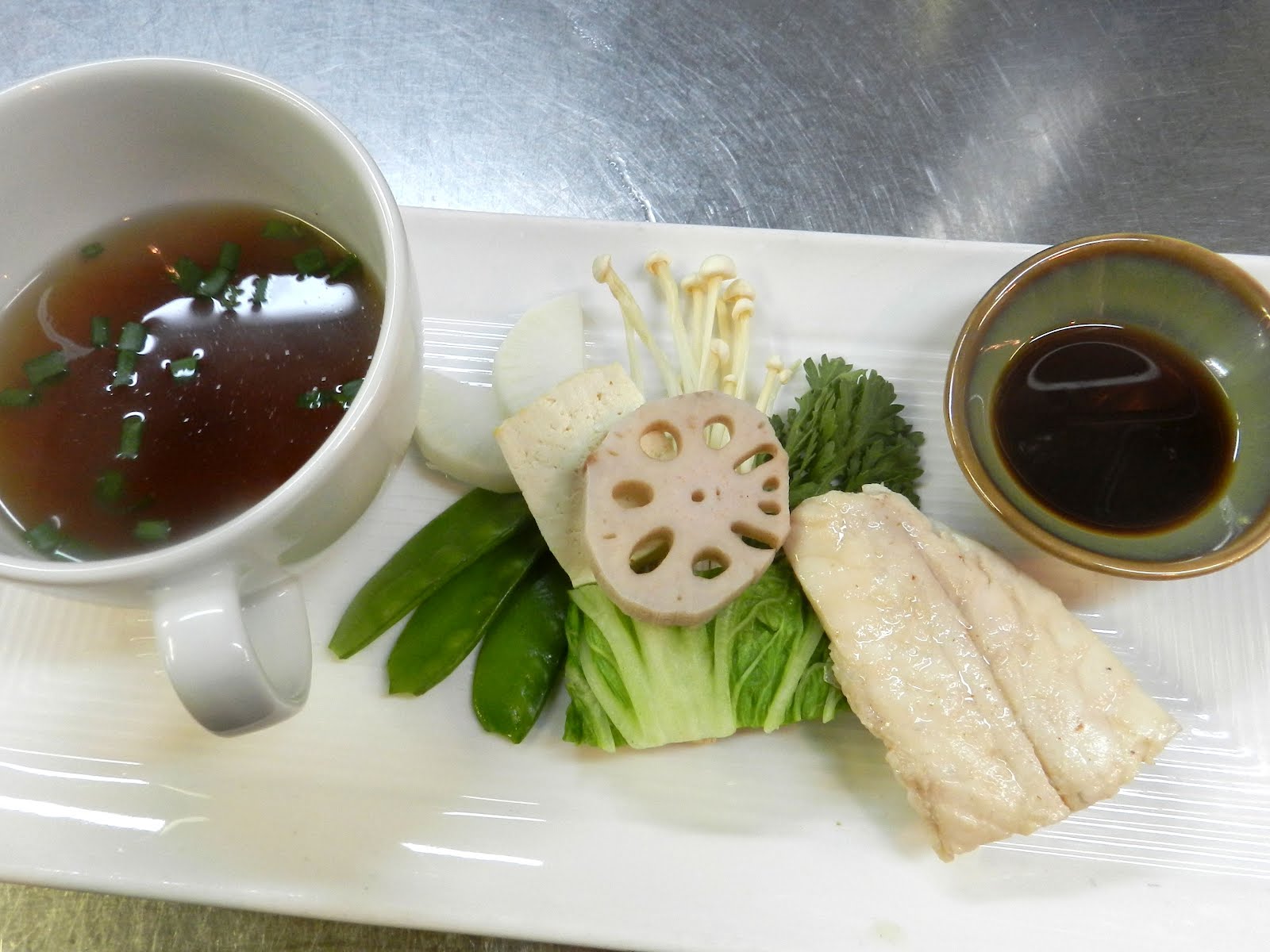
"Chirinabe". How do I tell a customer who is in love with a menu that we are not equipped to do a traditional nabe? I don't and I wing it, hence the quotation marks around chirinabe (fish hot pot). We just don't have the equipment to put communal hot pots on the tables (and the American customers would have freaked out at a communal pot anyway), so we blanched the vegetables and poached the black sea bass before plating them with a cup of boiling stock and small dish of ponzu for dipping. The garnishes, clockwise from the snow peas, are snow peas, daikon, enokitake, shungiku, sea bass, napa, tofu, and lotus root.

Purple Yam Custard. I wanted to finish with rice and then some fresh fruit. Customer wanted a dessert. So here is a pan-Asian dessert: a brûléed custard of Okinawa sweet potato, sesame seed brittle, and some fresh jackfruit in simple syrup. At least I managed to keep the dish non-sweet and sneak some fruit in too. The white flecks are sesame oil powder.

Thursday, February 23, 2012

Winter Ingenuity


Jerusalem Artichoke Bisque, garnished with beet cream, white truffle oil, and toasted pumpkin seeds. What to make when there's not much in the cooler.

Saturday, January 28, 2012

Vegetarian Chef's Tasting

This is a tale about letting go.

Last evening, we cooked a 5-course vegetarian tasting on a relatively slow Friday night, slow enough to let me take photos, something that I was unable to do all during the fall when we were so busy.

I was really happy to have this opportunity to do a vegetarian menu. Getting away from the meat-centric menu really frees my mind, removes constraints about how dishes are usually prepared, and gives me freedom to just do what I am feeling.

I loved each and every dish on this menu and I think we did a great job of putting the ingredients that we have now in dead winter on a plate in a creative and inviting and (most importantly) delicious manner.

While we were very pleased with the end result, the journey in getting there wasn't all that simple. Some menus just write themselves; this one did not. Over the past few years of designing menus, we have come to understand that simplicity is better than complexity, flavor trumps presentation, and if it doesn't feel right, it isn't. In short, we've learned to let go of pet ideas if they don't fit. There's always another day, another menu, another opportunity to try out that new idea.

A potato cake. This menu almost got derailed by a simple potato cake. For some reason, the Ecuadoran potato cake called the llapingacho insinuated itself into my conscious brain and wouldn't let go. From there, it was an easy enough leap to a full Ecuadoran menu. Over five or six days of brainstorming, we found ourselves putting dishes on the menu simply because they were Ecuadoran, not because they highlighted our local ingredients and not because we had a flavor profile that we were trying to express in a finished dish. This is not the way to design a successful menu. If a dish doesn't speak to you as a chef, discard it and move on.

I finally heeded the warning bells that were gently dinging in the back of my brain and punted the whole Ecuadoran menu save for the llapingachos that sent us off seeking the elusive red herring. At this point, we freed ourselves to get back to highlighting our local ingredients such as Jerusalem artichokes, rapini, and Fairy Tale squash.

As the menu started forming, all of us collectively said about the same time, "I'm not feeling the peanut sauce on the potato cakes." So we struck the traditional peanut sauce and that freed us to strike the rest of the Ecuadoran seasoning (achiote and cilantro) and just to retain that singular characteristic of the llapingacho that makes it stand out in the world's pantheon of potato cakes: the grated cheese in the cake itself.

And that is the lesson to take from this menu: learning to let go is hard but necessary. Don't force it. Keep it simple and distill it to its essence. Feel it and do it.

And now on to the photos.

Jerusalem Artichoke Soup. We have a super abundance of Jerusalem artichokes in our cooler just now and they are a natural for soup. They bring an almost inimitable silky appealing texture to soup. The downside is that they can bring a dull and listless grey color to the party as well. To mask this, we added a tiny bit of roasted red pepper for an orange hue, but not enough to flavor the soup. Too much of a silky soup can really bore your tastebuds, so we had to bring some acid to the party, which we did in the form of a roasted red pepper and goat cheese mousse. The acidic goat cheese is just the thing to keep your palate refreshed. Paired with a lemony Spanish Albariño.

Yukon Gold and Two Onion Potato Cakes. Here are the llapingachos that started this whole menu, made from local Yukon golds with a grated three-milk (goat, sheep, and cow) cheese, green onions, and caramelized onions. To reiterate the cheese, we have sauced these cakes with a warm cheese and beer sauce, using the same cheese as in the potato cakes and a very hoppy amber ale to give the cheese sauce a touch of hoppy bitterness to keep it from being cloying. The green sauce is a green onion cream that brings a cool acid bite to counterpose the rich cheese sauce. Paired with Chilean Pinot Noir. This could have easily paired with a white wine, but the customer's preference is red wine.

French Onion Soup Bruschetta. Not really sure where this dish came from except that we were probably cold on the day that we brainstormed this and wanted soup to warm us up. This is an exercise in reimagining a classic soup. We took the soup and puréed it to become the sauce for the plate and put the onions on top of the croustade rather than under it. High cuisine? Not. Delicious? You bet. Paired with a medium-bodied, lower acidity Willamette Pinot from Yamhill-Carlton.

Rapini "Wellington." Again, I don't remember the genesis of this dish. With three of us throwing ideas at the wall and seeing what sticks, creating dishes is a very crazy process. In any case, we decided to showcase our beautiful local rapini as a quasi-Wellington. I learned long ago that wrapping wet ingredients in puff pastry is a big fail, so we baked the puff separately and then topped it with the lightly bitter rapini, a duxelles of black trumpet mushrooms, and then a bit of herbed soft cheese to help marry the spicy earthiness of the mushrooms with the vegetal bitterness of the rapini. In the South, we always serve vinegar with our braised greens. The plate sauce of porcini stock and balsamic vinegar finished with a hint of cream (to round out the vinegar's tang) is a nod to that. Paired with a very high end Argentine Malbec.

Fairy Tale Squash Flan. Eat your vegetables! There's probably no more sinful way to eat your squash than as a silky flan flavored with cinnamon and maple syrup, and garnished with gianduia, crème anglaise, maple syrup, gianduia powder, a chocolate cigarette, crispy salted phyllo, and a pumpkinseed brittle flavored with pimentón and sea salt. Paired with a 10-year old tawny Port.

Saturday, July 23, 2011

Chef's Table

Here are some photos from a Chef's Table dinner back in early July. This menu is a celebration of the new produce that arrived this week: beets, new potatoes, napa cabbage, cavolo nero, cauliflower, pluots, and peaches.


Chłodnik. It's hot, it's beet season, and there are some dill pickles from last season to be used. Time for this lovely Polish take on cold beet soup.


Early Summer Vegetable Plate. It was still too early for peppers, eggplants, and tomatoes—that glorious summer trio—when we did this dinner. So we made do with summer squash and green tomatoes. Here you see a miniature squash cake, a fried green tomato, and pesto goat cheese truffle, all garnished with various little bits from the plants on our deck.


Arctic Char. This dish isn't so much about the char as what the char is sitting on: a smoked bluefish new potato salad. This was an exercise in using the first new potatoes of the year. The char is notable really only for the way that it is cooked: skin side down on the grill until it reaches medium rare. The heat stays on the fatty skin side and yields a very delicate product.


Pork Confit on Kimchee. This dish is all about using the first napa cabbage of the year. I did a quick overnight kimchee pickle on it so that it was still fairly crunchy. We topped it with shreds of our latest batch of pork confit.


Grilled Lamb Loin and Cavolo Nero Packet. How fortunate for us that we got the first delivery of the season of cauliflower and cavolo nero on the same day that we received a new lamb. Here then is a piece of top loin (the New York strip if you will) wrapped in cavolo nero and grilled along with a cauliflower purée, red wine-lamb stock reduction, and chanterelle mushrooms.


Peach, Pluot, and French Toast Napoleon. Peaches and pluots just hit the market the week of this tasting and so it was a no-brainer that they were going to feature in dessert. The napoleon is sitting in a pool of cherry soup, made from the very last of the cherries from this season.

Wednesday, July 20, 2011

Pork Confit Summer Posole

Here's a decidedly non-traditional posole that I just made for dinner to use up some leftover pork confit and some fresh corn. Tradition or no, it is delicious.


1 cup duck fat from pork confit
3 large poblano chiles, diced
2 large onions, diced
4 ears corn, shaved, cobs reserved
1/4 cup minced garlic
stems from one bunch cilantro, finely minced
2 tablespoons ground cumin
1 tablespoon dried oregano
2 bay leaves
1/4 cup ancho chile paste
16 ounces pork confit
1 #10 can hominy
1-1/2 gallons pork stock

Heat the duck fat in a large soup pan (to hold 2-1/2 gallons soup) and add the chiles, onions, corn, corn cobs, garlic, cilantro, cumin, oregano, and bay leaves. Cook over high heat, stirring as necessary, until the onions become translucent. Add the chile paste and stir well. Add the pork confit, hominy, and pork stock. Bring to a simmer and simmer until the vegetables are tender, approximately 30 to 45 minutes. Season to taste. This recipe does not call for salt because pork confit is salty in its own right.

Remove the bay leaves and corn cobs from the soup and discard them. The corn cobs add both flavor and a touch of corn starch to the soup. The starch adds a hint of body.

I like to serve a garnish plate with my posole: fresh cilantro, lime wedges, finely diced white onion, dried oregano, and crushed red pepper flakes.

Pork Confit

This is the classic French curing and preserving technique traditionally used for goose and duck, extended to pork shoulder. The results are so worth the effort.

Two large pork shoulders, about 15 pounds, cut in 3" cubes.
2 cups kosher salt
1 tablespoon ground juniper berries
2 ounces fresh thyme branches
2-3 gallons duck fat, as necessary

In a large non-reactive pan, rub the pork cubes with the salt, juniper, and thyme. Cover and refrigerate for 48 hours. Remove, rinse off the salt and thyme, and drain well. Place in a large braising pan. Melt the duck fat and pour enough over the pork to cover. Place in a slow (200-250F) oven and cook until meltingly tender, 8-12 hours. Remove pork from duck fat and place on sheet trays and chill rapidly. Place the chilled pork in a large metal storage container and pour the reserved duck fat over to seal the pork entirely. Refrigerate.

While pork confit can be used immediately, it is better after it ages for a few weeks. To use, place the metal container on a broiler or in the oven to melt the fat. Remove the amount of confit necessary. Let the fat resolidify over the remaining confit. Add more duck fat if necessary to cover.

Friday, July 23, 2010

Chef's Tasting

I finally managed to get some photos from last night's Chef's Table menu. It's often too busy to photo the food.

Leek and Potato Shooter. A shooter of classic Vichyssoise topped with an oca latke and micro onion greens. Oca is a rare Andean tuber that strikes me as a cross between a fingerling potato and a sunchoke/Jerusalem artichoke. Oca is an Oxalis (O. tuberosa), so it brings a little of that classic sweet-tart oxalic acid flavor to the party. The micro onion greens are from Chef's Garden and are not onions at all. What they are, I don't really know, but they have a small tomato-like leaf and a great onion flavor. The idea behind this dish is that you eat the latke in a single bite and chase it with the soup.

Cantaloupe Carpaccio. Mandoline-cut local cantaloupe topped with cubes of cantaloupe marinated in lime zest and agave nectar, Thai basil oil, micro Thai basil, purslane, and red ribbon (aka blood) sorrel. I'm so glad that cantaloupes are just starting to ripen here. Notice the generous grind of pepper on the dish; cantaloupe loves pepper: it brings out the sweetness in the melon. Wine pairing: Broadbent Vinho Verde NV.

Tomato. We should have tomatoes coming out of our ears by now what with all this scorching weather, but nobody can seem to get tomatoes to ripen this year. We have been hoarding and ripening a very few tomatoes just for this tasting. Here you see tomato ricotta gnocchi in a pool of pesto garnished with micro opal basil, a small tomato stuffed with yellow tomato granita, and a tomato taco suave. The tortilla is masa and tomato, the filling is tomato dice tossed in pesto, and the garnishes are sun-dried tomato sour cream and micro basil. I was very pleased with the amount of flavor we managed to pull from the yellow tomato granita, which we served with a grind of sea salt on top. Wine pairing: Château de Ségriès Tavel Rosé 2009.

Lamb Makisushi. This dish is the answer to the question, "How do we serve lamb like sushi?" You see a maki roll of grilled summer squash, Israeli couscous, and braised lamb shank. The green garnish is leek leaves. The wasabi is colored mashed potatoes, the gari (pickled ginger) is pickled zucchini, and the soy sauce is the lamb braising liquid. High cuisine? I don't know. Fun? Most definitely. Wine pairing: Fabbioli Cabernet Franc Virginia 2008.

Napoleon of Pulled Pork. This dish represents summer to us. We were looking for a way to showcase corn, squash, and tomatoes in the same dish. You see a napoleon whose layers are, from the bottom to the top, sinfully unctuous squash cake, pulled pork, pimentón- and cornmeal-crusted green tomato, pulled pork, and fresh corn cake. The pork is shoulder that we have braised in the Cuban style: classic puerco con mojo. Garnishes are micro cilantro, sweet corn sauce, charred corn, red and orange pepper confetti, and chipotle adobo. Wine pairing: Fabbioli Chambourcin Virginia 2008.

Blueberry Cheesecake. I'm starting to move away from the slice of dessert on a plate school and moving more to deconstructed desserts. Here you see bite-sized blueberry cheesecakes, fresh blueberries, blueberry sauce, crème anglaise, graham cracker crust, and micro lemon balm. I'm very happy with this dessert. Wine pairing: Di Lenardo Verduzzo Passito Venezia Giulia 2003.

Thursday, June 3, 2010

25th Anniversary 9-Course Vegetarian Tasting

Earlier this week, we did a nine-course vegetarian tasting menu for a couple's 25th wedding anniversary. In some respects, the timing was good, this being the last week for local asparagus and sugar snaps, and being the first week for English peas. In other respects, doing vegetarian menus before the onset of the summer vegetables such as squashes, peppers, tomatoes, and eggplants poses its challenges.

This menu is truly a menu of the season and was inspired in large part by what we found at the farmers market and what our growers brought to us: green garlic, garlic scapes, sugar snaps, English peas, fava beans, fennel, asparagus, dandelions, mulberries, morels, and shiitake mushrooms.


Sopa de Ajo. Creamy Soup of Local Green Garlic; Roasted Garlic Scape; Garlic Scape Pesto. This was inspired by the abundance of green garlic and garlic scapes that we have from thinning our garlic and keeping them from blooming so that they will focus on making garlic bulbs. Wine Pairing: Feffiñanes Albariño Rias Baixas 2008.


Fennel. Salad of Fennel Confit, Fennel Latke, and Fennel Slaw; Pernod Cream. We have so much fennel on hand now that we are looking for creative ways to use it. Fennel confit was marinated in herbs, garlic and olive oil then grilled and then poached in olive oil for 10 hours. The greens you see are red-stemmed dandelions. Wine Pairing: White Hall Vineyards Viognier Virginia 2008.


Spring. Sauté of Morels, Peas, Sugar Snaps, Favas, and Garlic Scapes; Achiote Pasta. This was conceived as an open-faced raviolo showing off all the spring vegetables on hand. The morels and veg were cooked in the Tuscan style called trifolati, in the style of truffles, with butter, garlic, and lots of fresh parsley. There's no better spring sauté in the world! Wine Pairing: La Slina Gavi di Gavi 2008.


Napoleon of Local Shiitake Mushrooms. Roasted Shiitakes; Crispy Goat Cheese; Crispy Shiitake Bits; Balsamic Gel. I love shiitakes and goat cheese together (anybody remember my shiitake polenta with herbed goat cheese mousse?) so the napoleon flowed naturally from the disk shape of the mushrooms and the cheese. We wanted some bacon for this dish; the crispy shiitake bits do a great job standing in for the bacon. Balsamic vinegar works really well with shiitakes too. I wanted to use the balsamic as a plate garnish but didn't want to reduce it and get that muddy caramelized balsamic flavor, so I gelled it. Wine Pairing: Swedenburg Pinot Noir Virginia 2008.


Vegetarian Yiouvetsi. Baked Orzo with Tomatoes, Artichokes, Preserved Lemons & Local Goat’s Milk Feta. My Greek friends know that I'm a fairly deft hand with a traditional yiouvetsi, baked orzo with lamb and tomatoes, redolent with olive oil, lemon, and fresh oregano, topped with feta cheese. I had heard of Michael Psilakis doing a vegetarian one, but I never knew what he put in it. That idea has been in the back of my brain for a long time and I am happy to have had the chance to bring it to a menu. This one contains tomatoes, onions, artichokes, house-cured preserved lemons, and garlic scapes. It may not look like much in the photo, but the flavors are intensely amazing. Thanks to Alan at Spriggs Delight Farm for the feta. Wine Pairing: Dupeuble Beaujolais 2008.


Panisse. Fried Chickpea Cake; Smoky Chickpea Salad; Roasted Red Pepper Hummus. For red wine vegetarian courses when tomatoes are not in season, I look to paprika and last year's roasted red peppers. And I love chickpeas. I eat them every day; they are my primary source of protein. This then is a loving homage to the many forms of chickpeas. Note to anyone listening: we tried to make the smoky chickpea salad with fried chickpeas, thinking we could get them crunchy. Instead, they just got leathery and no bueno. Wine Pairing: Borgia Campo de Borja 2008.


Stuffed Piquillo. Sweet Red Piquillo Pepper Stuffed with Israeli Couscous in the Style of Paella. You may have seen me make this couscous on WVPT. It is a customer and staff favorite because the flavors are so amazing. The couscous is flavored with sweet yellow and red peppers, artichoke hearts, yellow onions, green onions, tomatoes, saffron, garlic, and pimentón. And piquillos are the best tasting red pepper in the world. All in all, a terrific dish. Wine Pairing: Finca Sobreño Toro 2005.


Cheese Plate. Artisanal Cheeses; Mulberries; Caerphilly-Pecorino Crackers. I don't eat sweets after a meal; they just don't appeal to me. But I love to finish dinner with cheese and a glass of wine so when the customer told me he'd like to finish dinner with cheese, he was talking my language. I foraged some mulberries and made some crackers to accompany the three artisanal cheeses, one each from New York, Wisconsin, and Virginia. Wine Pairing: Linden Claret Virginia 2006.


Gorgonzola Cheesecake. Candied Walnuts; Port Reduction. Another riff on the cheese theme to end dinner is my subtle gorgonzola cheesecake made with Gorgonzola Dolce. This is my kind of way to finish a meal: all the classic port accompaniments reworked into a dessert. Wine Pairing: Warre’s Otima 10-year old Tawny Port.