Showing posts with label mussels. Show all posts

Tuesday, March 26, 2013

Northern Italian Tasting

We're generally not in the habit of having customers dictate the direction of our tasting menus, preferring instead to take the best ingredients we have on hand at the time and shape them into a menu based on our own whims. But our customer for this dinner was insistent that we do a tasting of the foods from the provinces of Northern Italy. OK. I would have gone to a Northern Italian restaurant for this, but never mind, we can cook pretty much anything.

The hardest part of this whole exercise was deciding the order of the courses; for example, would the Piemontese course be primo, a secondo, a dolce? Once we got the ordering of the courses, progressing from first courses to seafood to meat to sweets, then it was easy enough to draw inspiration from each region to fill in the details.

Chicken Liver "Crostino"
Toscana: Chicken Liver Crostino. Chicken liver crostini are some of the best known appetizers in Tuscany and since we had chicken livers on hand, we decided to do a take on this well known primo, but reinvent the form. We cooked the livers in the traditional manner with onions, sage, rosemary, capers, anchovies, and Cognac. Then we formed the liver mousse into truffles and rolled them finely powdered crostini, cocoa powder, and espresso powder. The bitter cocoa and espresso worked with the liver very nicely.

Speck Knödel/Canederli Tirolese
Alto Adige: Speck Knödel/Canederli Tirolese. We went back and forth on a soup course, but the weather by turning cold and nasty made the decision easy for us. I have always loved the bread dumpling soups of Bavaria, Austria, and the Südtirol and wanted to reprise them for this menu, to show the Germanic influences in the cuisine of Alpine Italy. I made a classic brown stock from both pork and chicken necks and then poached quenelles of knödel batter in it. The batter is white bread soaked in milk, garlic chives, sage, minced speck, and eggs.

Gambero al Prosecco
Veneto: Gambero al Prosecco. I wouldn't argue if you wanted to call this Shrimp and Grits because that is basically what it is. This is our take on the classic Venetian dish of Schie con Polenta, tiny head-on shrimp in a garlic butter sauce over creamy polenta. Making the sauce with Prosecco is a nod to the famous sparking wine of the Veneto.

Trofie al Pesto
Liguria: Trofie al Pesto. You just can't think of Liguria and Genoa without thinking of basil and that most famous of sauces, pesto. What snaps immediately into my mind is a big plate of the local pasta, trofie, in pesto sauce. Plates of pasta just don't look all that pretty on tastings, so we mixed the trofie and pesto with some ricotta and eggs and baked them in little molds so serve as a base for mussels steamed with pesto.

Grilled Trout with Fennel, Chestnuts, and Lardo
Val d’Aosta: Grilled Trout with Fennel, Chestnuts, and Lardo. Moving right up next to France and Switzerland, the next course took its cues from regional products. This dish has no basis in classic Italian cooking: it is one of my own invention, but I daresay that it would feel at home in a modern restaurant in the Val d'Aosta. We grilled trout and then served it with a sauce made from caramelized fennel, shallots, and peeled chestnuts, splashed at the last second with a touch of anisette and bound with a splash of cream. On top is a very thin sliver of house-cured lardo. This dish is a keeper and I look forward to reprising it at some future time in the main dining room.

Radicchio, Wild Mushroom, and Sausage Strudel
Friuli/Venezia Giulia: Radicchio, Wild Mushroom, and Sausage Strudel. As a student of culinary history, I am always amazed at how cuisine pays no heed to political boundaries. For example, strudel, ignoring modern country borders, can be found all over the former Austro-Hungarian empire, including the far northeast corner of Italy. We made our strudel of radicchio, wild mushrooms, and a house-made sage sausage. Although it is very tasty, radicchio goes nearly black when cooked and does not necessarily make the prettiest strudel filling.

"Osso Buco" Milanese
Lombardia: "Osso Buco" Milanese. What is more representative of the cooking of Lombardia than osso buco milanese, succulent veal shank over saffron risotto? Nothing. How do you serve it for a nine-course tasting? We like the arrancino form.

Rabbit Bolognese
Emilia Romagna: Rabbit Bolognese. Emilia Romagna, among others, has two very famous exports: prosciutto di Parma and salsa bolognese from Bologna. We decided to marry a classic salsa bolognese made of rabbit with prosciutto, by wrapping the salsa in prosciutto, to give the salsa form on the plate. It is plated with saffron aïoli and a touch of sun-dried tomato pesto.

Chestnut and Red Wine Panna Cotta
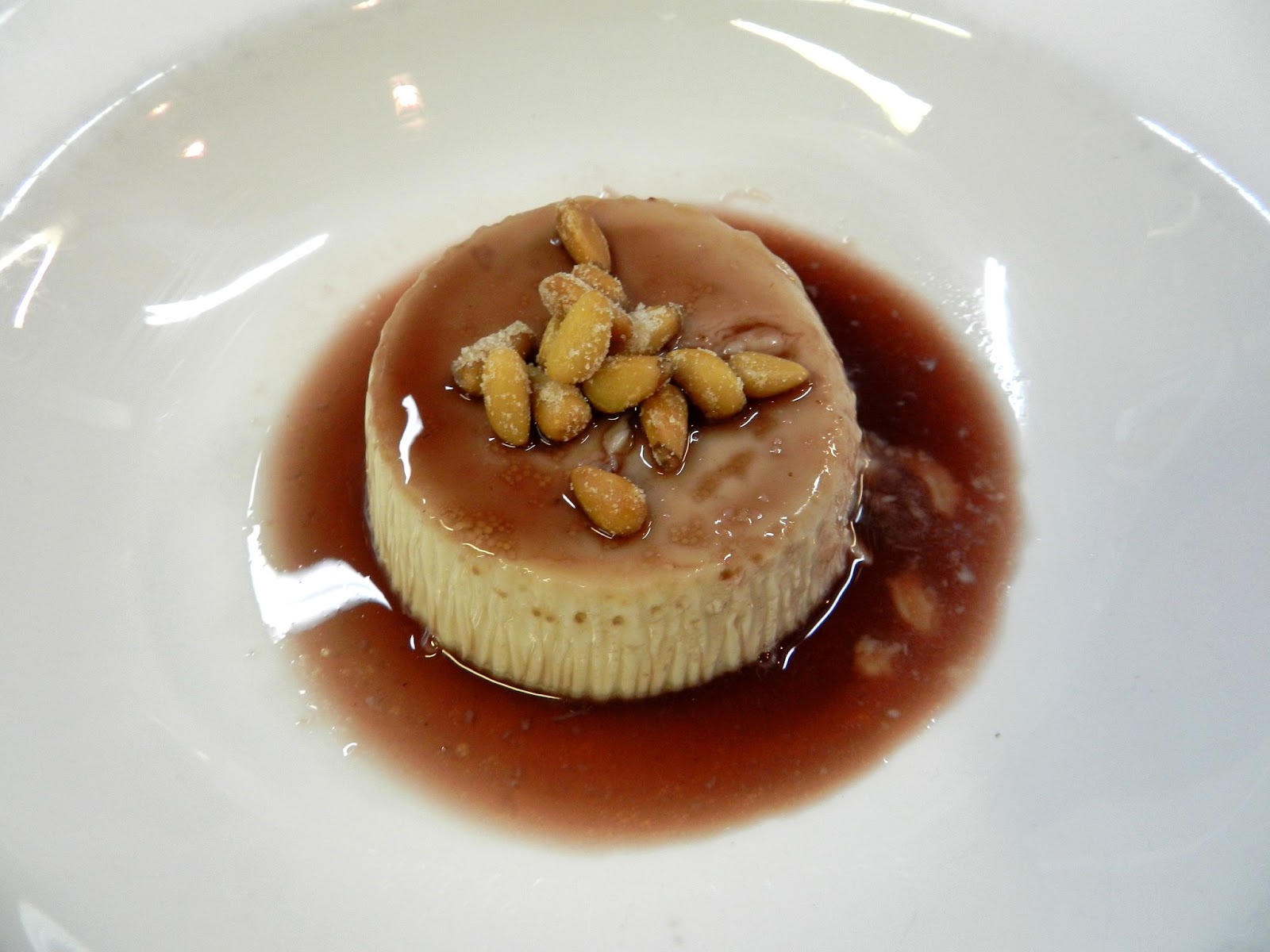
Piemonte: Chestnut and Red Wine Panna Cotta. Panna cotta is a classic dish that I associate most closely with the Piemonte. This is a two-layer panna cotta of jellified Nebbiolo wine and a chestnut cream. I have gently reheated the panna cotta so that the red wine layer has just about melted, forming a sauce à la crème caramel. Topped with candied pine nuts.

Tuesday, December 18, 2012

Winter Tasting

We're getting to that time of the year (and we still have months to go) which taxes our ability to put fresh and local ingredients on the table. We're having to get creative with storage vegetables, winter greens, and items from the pantry.

Sopa de Ajo, Chorizo, Chorizo Oil

Stuffed Mussels, Chickpea Salad, Safrron Aïoli

Brussels Sprouts Salad

Scallop, Sweet Potato Purée, Black Truffle Beurre Blanc

Five Spice-Orange Pupusa Stuffed with Duck Confit, Curtido

Ballotine of Quail Stuffed with Pork/Pistachios/Cranberries

Rabbit Bourguignon, Broccoli Raab, Rabbit Demi

Venison and Cavolo Nero, Five-Spice Black Vinegar Sauce

Risotto of Thai Purple Rice, Coconut, Persimmon

Saturday, December 8, 2012

Another Tasting

Here are photos from another recent tasting. Couple of ideas that I would like to remember here, especially the mussel soup, the kale salad, and the rabbit Bourguignon in pastry.

Deconstructed Paella?
Mussel Soup. This dish started with a color, saffron, chorizo oil against a golden soup. From there it morphed into something of a deconstructed paella. The soup is salsify with saffron, mussel broth, and a little cream. The main garnish is a mussel salad: mussels, EVOO, Sherry vinegar, garlic, roasted red peppers, and diced tomatoes. The minor garnishes are chorizo oil, crispy chorizo, and socarrat—the crispy rice bits from the bottom of the paella pan.

Kale Salad
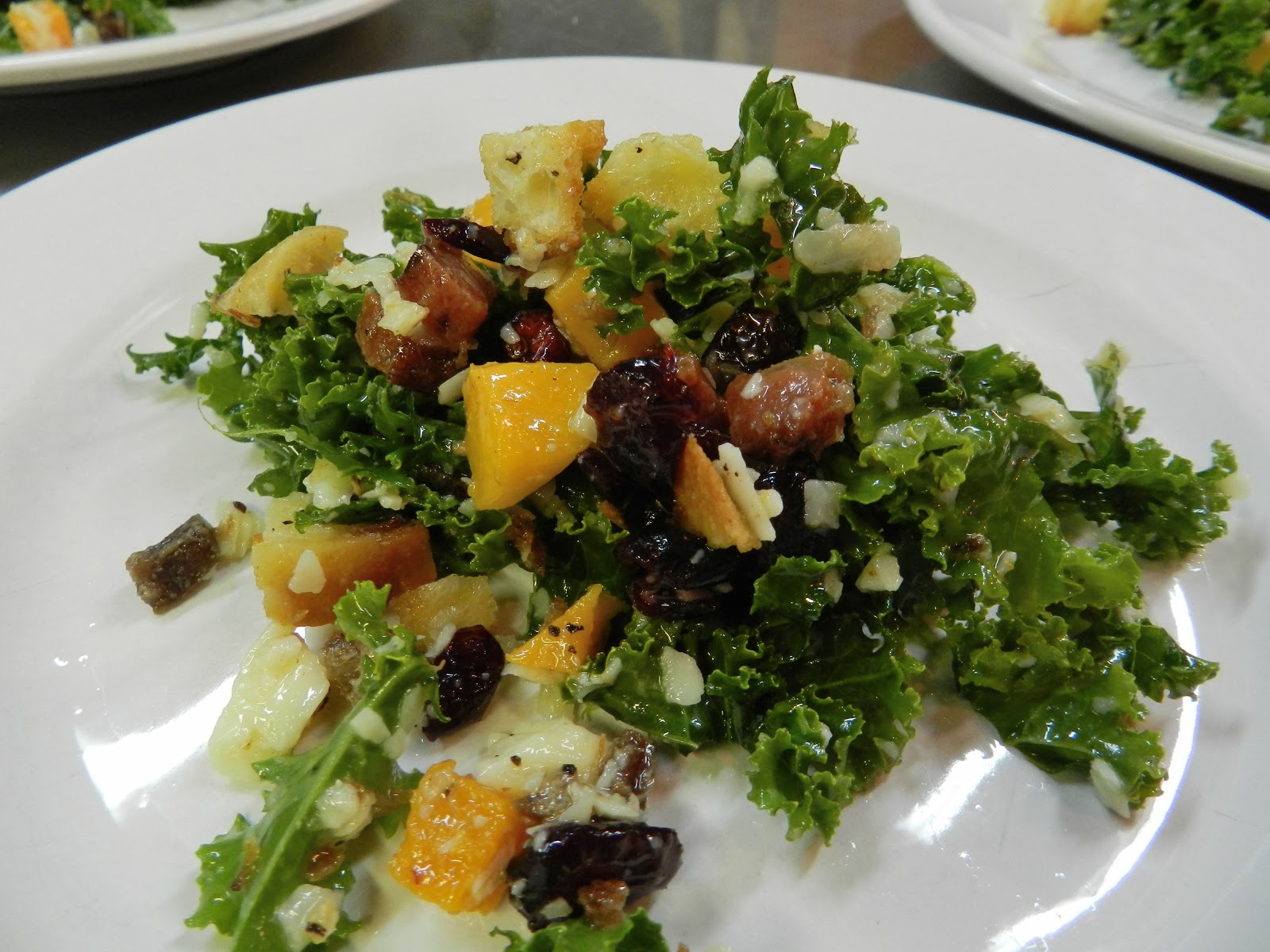
Kale Salad. This is a blatant rip-off of a wonderful salad that Kelly White of Glen Manor Vineyards served me a few days ago. She's a great chef and this is a fantastic must-remember salad! It is tedious to pull off the tender, frilly edges of the kale, but after that, it is child's play. Garnishes for the salad include crispy pork belly bits, crispy bacon, grated pecorino, dried sweetened cranberries (Kelly used currants), roasted butternut squash, and croutons fried in bacon fat. To this I added some bacon fat, EVOO, lots of lemon juice, a touch of maple syrup, salt, pepper, and some minced garlic; and, surprise of surprises: I adjusted it to taste!

Rabbit Bourguignon
Rabbit Bourguignon. We are blessed with lots and lots of rabbits and so we struggle to find good ways to use them. And among the dozens of ways, we really do love this one. The trick, to sell rabbits in our market, is to take it off the bone, something that is anathema to Europeans who are used to rabbit on the bone. Once we take it off the bone, it is formless and we struggle, absent the bones, to give it form and definition on the plate. Wrapping the rabbit in pastry is a great and tasty way to present it. We have cooked the rabbit in the traditional Burgundian style with bacon, onions, mushrooms (cèpes or porcini), and Pinot Noir. A little of the reduced braising liquid serves as a sauce and some tiny Brussels sprouts serve as garnish.

Veal Shank Puttanesca; Black Barley Barlotto
Veal Shank. We lucked into some tiny veal shanks and so we did a take off on ossobuco, braising the veal in a puttanesca (spicy tomato with anchovies, capers, and olives) sauce. Rather than risotto milanese, we did a barlotto, black barley cooked in the style of risotto. Good hearty food, but culinarily unmemorable.

Pawpaw Parfait
Pawpaw Parfait. Back in the fall, we collected a lot of pawpaws and froze a lot of pawpaw pulp against the day when there wouldn't be a lot of local fruit with which to work. This parfait looked a lot nicer in person than it does here: you really cannot see the ruby red of the cranberry jelly layer that sits on top of the pawpaw panna cotta layer. On top of the cranberry layer is a layer of vanilla custard, a sprinkle of crunchy granola, and a whirl of whipped cream. Surprises: hidden in the middle of the panna cotta is a chocolate truffle and hidden in the vanilla custard is a swirl of orange cream cheese.

Saturday, March 3, 2012

Early March Tastings

Here are photos from a series of tastings we've done this week, playing games with what we have on hand.

Salmon Tartare. There's [sc]eviche, tartare, crudo, poke and all manner of other names for raw fish dishes. I'm calling this tartare and not seviche because the citrus juice goes on seconds before the dish hits the table so that there is no discoloration/firming of the flesh. Any time that we have a fatty fish belly, you can rest assured we're making a similar dish, whether or not it appears on the menu. It makes a great chef snack. This one contains red and yellow peppers, capers, green and red onions, Meyer lemon juice, and extra virgin olive oil. And as an accidental metaphor for the list of ingredients, note kitchen sink in background.

Mussels with Coconut-Yuzu Sauce. Finally, some good lighting in a kitchen picture! Sure I'd love to have a reflector behind this, but the quality of light on my cutting board versus on the main plating line is much nicer. Note to self. This is mussels steamed in coconut milk with yuzu juice and the sauce finished with a touch of fish sauce, lime leaves, and sugar. Grated lime zest and green onions over.

Grilled Shrimp. This all started early in the week when a customer inspired us to create a Provençale style pasta sauce. On the plate are two tiny wedges of a duck egg frittata made with roasted red peppers and goat cheese. These are the sops for a sauce of grilled peppers, sun-dried tomatoes, caperberries, black olives, fennel fronds, and orange zest. Propped up on all this is a grilled shrimp, marinated in black olive, garlic, and orange zest paste.

Duck Salad. This dish was really an exercise in how to use a new bottle of butternut seed oil. We're experimenting with it and naturally, it crossed our minds to make a dressing from it and Meyer lemon juice. The dressing is delicious. From there it's just a matter of building a salad around the dressing: local mesclun tied with Meyer lemon rind, duck confit, duck cracklings, duck fat croutons, orange segments, and toasted pumpkin seeds.

Rabbit Loin. Rabbit and fennel were made to go with each other: it's a magical combo. We've pounded out rabbit loin, dusted it with fennel pollen, and stuffed it with goat cheese mixed with fennel fronds and confit of fennel. Then it's rolled and wrapped in prosciutto, seared and finished in the oven. Purée of fennel and celery root down with a few cubes of fennel confit. We made the fennel confit in duck fat rather than olive oil.

Mushrooms and Bacon. We received a lot of brown beech, white beech, and pioppini mushrooms this week; you see them here featured with slab bacon on top of polenta. Nothing earth shattering or fancy about this, just plain old comfort food.

Teriyaki Royal Trumpet Mushrooms. In with the rest of our mushrooms this week were a few large royal trumpets, a mushroom that I like best when grilled and glazed with teriyaki sauce.

"Arancino." Here's a little play on food. When you hear arancino, you expect the deep-fried Sicilian risotto ball, perhaps stuffed with cheese or maybe even a ragù. But I doubt you expect our Northern Chinese Style pulled lamb stuffed into a fried rice ball. A little local bok choy to complete the dish.

Pork Belly. We were playing with the idea of Chinese steam buns stuffed with pork belly. But I'm not big on the texture of steamed dough, so I grilled it. There is something magical about tucking into a slab of pork belly with freshly cooked bread!

Here you see two different presentations. I'm not super happy with either presentation. The flavor was excellent, but the presentation is still lacking.

Jackfruit and Meyer Lemon Granita. This is a dish that had customers raving. The combination of the hyper-tropical flavors of the jackfruit with the lemon-orange tartness of the Meyer lemon yielded the best sorbet/granita I have ever tasted. Topped with a touch of amarena cherry mosto cotto and set on a piece of sinful coconut French toast.

Truffles. So every now and again, we make truffles. They're a fun way to end the evening. These are rolled in toasted coconut and in crushed candied walnuts. Plated with raspberry coulis and fried salted rice paper for a little texture.

Friday, January 21, 2011

Seafood and Root Vegetables

Root Vegetables. They're just not that cool, but that's pretty much what is in our cooler right now, it being the middle of winter. And when a couple from Warrenton engaged us to do a tasting menu for them last week, that is all we had in house to work with. They also requested no meat for their menu, but they love all manner of seafood, so we used that as our starting point for their custom menu.

While planning their menu, I had this slightly whack idea: why not pair a different seafood with a different winter root vegetable for each course, except for dessert? So we randomly paired each of six seafoods with six winter root vegetables used this as the basis for our menu. Doing the menu this way proved to be a great intellectual challenge: pairing seafood with root vegetables is rarely ever done. Here are the results of our brainstorming.


Scallops and Parsnips. We took our cue for this dish from brandade de morue from the south of France. The modern interpretation of brandade is a silky paste of salt cod, potatoes, olive oil, and garlic. We decided to try it with salted scallops and parsnips instead. And topped with a seared scallop, it worked extremely well. We're very pleased with this dish.


Crab and Sweet Potatoes. This is a complexly flavored sweet potato bisque seasoned with kaffir lime, green curry paste, Thai basil, and coconut milk. I no longer remember the genesis of this soup, but I think we have done similar sauces in the past. The bisque is topped with crabmeat marinated in a kaffir lime vinaigrette. We liked this so much that it went directly on to our nightly menu as an appetizer.


Oysters and Celery Root. We've done a lot of celery root purées this winter already and were looking for different ways to showcase this delicious vegetable, especially for a way to highlight it in its raw form. Immediately springing to mind was a celery root rémoulade that I had at Tujague's in New Orleans about 20 years ago. From here, it was an easy leap to an oyster Po Boy topped with celery rémoulade. The celery root fries were a last minute addition and the answer to the question to my cooks, "Does celery root make good fries?" Indeed, it does not. It makes outstanding fries. Live and learn.


Lobster and Leeks. This is what happens when we take our shrimp and grits from the lunch menu and amp it up with lobster, leeks, and truffles. The grits are Anson Mills as usual, but amended with a lot of creamed leeks. Truly decadent grits. The lobster is just along for the ride when compared to these grits.


Mussels and Red Onions. I confess that I went really overboard here. I am the one chef that you can generally count on not to mess with the form of an ingredient and here I go making mussels into a musselwurst. I have done every form of fried, stuffed, baked, and steamed mussel imaginable over the years and for some reason, I decided to just go crazy. So we have a mussel and caramelized red onion sausage on a bun with caramelized red onion mustard, caramelized red onions, and pickled red onions. It was a damned good seafood sausage if I say so myself, but my bun, to be polite, sucked.


Fish and Daikon. And finally, we deal with daikon. There's a ton of daikon at the farmers market now and I've been using a lot of it. Daikon led me to free associate with sablefish because sablefish is very highly prized in Japan. The natural application for daikon is raw and done in an Asian theme, so I wanted to stay away from that. I kept saying to the cooks, "Let's do something classic and French." We tried a bunch of things from grilled daikon, OK, to red wine-braised daikon, horrible, when Chris said, "Daikon Pommes Anna!" So we have seared sablefish on a daikon "pommes Anna" with wild mushrooms and a beurre rouge. The daikon pommes Anna was very tricky to pull off; daikon does not have the starch that potatoes do, so getting the cake to hold together was a problem. Once the technical issue was resolved, the result is a beautiful and classically European take on ingredients that are typically treated in an Asian style. Mission accomplished!

Thursday, January 7, 2010

"I want my money back!"

Cooking an order of mussels at lunch reminded me of a grumpy old man at dinner several years ago.

He came in solo for dinner and ordered an appetizer of mussels for his dinner. Maybe he wasn't hungry; I'm thinking he was looking for an inexpensive (read "free") meal because a minute or two into his mussels, he summoned the server to the table to complain that several of the shells contained no mussels at all and that he didn't want to pay for them, oblivious (more than likely intentionally so) that said mussels had fallen out of the shells to the bottom of the bowl.

I ended up comping him for the mussels (and the three loaves of bread) that he ate knowing that he'd never come back and that he'd go pester some other restaurant. And sure enough, we've never seen him since. I still chuckle about the old guy from time to time when I remember him. He's the kind of customer that makes for a good story at our Christmas party.

Friday, April 25, 2008

Terrific Tapas Dinner

Last night, we hosted our monthly wine dinner, this month featuring the wines of Spain along with tapas. I've never worked on such a short deadline before. I finally tasted the wines two days before the event and then threw together a really quick menu, one that customers were apparently pretty happy with. It's a shame that we were too slammed—we were full, in addition to the wine dinner—to get photos of the plates.


Mussels with Parsley and Garlic; Mayonesa Verde
Shrimp in Escabeche on Rustic Olive Bread

Cavas Castillo de Perelada Blanc Pescador NV

The Blanc Pescador is a delicious, slightly sparkling vino de aguja that is a slam dunk with shellfish. I cannot eat tapas without eating mussels, so I made this dish of marinated steamed mussels for me. After steaming the mussels, I reduced the mussel liquor with garlic and parsley, then used it as a base for a light vinaigrette. The green mayonnaise brought a fresh herbal quality to the dish.

Tapas, at least here in America, are no longer totally the province of Spain, witnessed by this classic Peruvian escabeche of shrimp, shrimp poached in a court bouillon and marinated in a red wine vinaigrette with sweated carrots and onions, oregano and parsley. I love cold seafood salads when the weather turns warm and the weather just turned warm.

Wild Mushroom Canapés
Tortilla Española with Porcini Mushrooms; Herbed Goat Cheese Mousse
Cavas Castillo de Perelada Tinto Crianza Empordà 2004

Originally, the wine distributor wanted to place this wine near the end of the tasting, but it is a very light-bodied red with black and red cherry fruit, reminding me of a Burgundy or Sangiovese in weight and texture. I detected a slight smoky note in the wine and thought to amplify this by pairing it with mushrooms.

Canapés are a classic tapas form. I sautéed a big batch of Yellowfoot Chanterelles with shallots and thyme and topped grilled slices of baguette. For the tortilla, I riffed on the traditional potato tortilla that you will find in every tapas bar in the world. In my reworking of the dish, I rehydrated dried porcini, then strained and reduced the porcini broth to a few tablespoonfuls. I mixed this broth in with the eggs and lots of fresh thyme. I built the tortillas by layering potatoes, porcini, thinly sliced yellow onion, and local Everona Dairy Piedmont sheep cheese.

Paella Cake; Pimentón Sauce
Piquillo Pepper Stuffed with Spicy Chickpea and Olive Salad
Finca El Paso Monastrell Jumilla 2005

This Monastrell is a full-bodied, fruity red that can stand up to pretty much any red wine food that you can throw at it. I thought that the fruit would like a little spice to play against, so I spiced up the Piquillos del Lodoso just a bit.

The best part of a paella is the socarrat, the crust at the bottom of the pan, so I devised a way many years ago to get lots more crust. I make a basic paella, without the large meat ingredients, bind it with eggs and grated sheep cheese, form it into cakes, and crisp both sides in a pan. The inside is creamy and the outside is crunchy: irresistible.

We are well known for stuffing piquillos—I say they are the world's best sweet red peppers—with just about everything imaginable. Customers had requested bacalao, salt cod, picadillo dulce de cordero, sweet and sour lamb, and just about everything in our repertoire. I wanted to do something that none of the regulars had tasted before and I needed to keep this course vegetarian, so I made a salad of chickpeas, red onion, and green olives dressed with pimentón, olive oil, garlic, and chile paste.

Grilled Banderilla of Potato, Olive & Chorizo; Picada
Albóndigas of Wild Boar Picadillo Dulce in Romesco Sauce
Ribas del Cúa Adras Roble 2004

The Adras is another full-bodied red, so I decided to throw some flavor its way. I've been making banderillas (anything on a small skewer, designed mainly to be eaten as a single bite) for years, but have only recently been designing banderillas to be grilled. These were a tiny local fingerling potato, a large queen olive, and a round of chorizo. The picada is a green sauce that I associate with the Basque regions of Spain (as opposed to France).

And here's the picadillo dulce that customers were clamoring for. The twist this time, wild boar rather than lamb, and rather than stuff it into piquillos, I formed it into traditional meatballs and slow-cooked them in romesco sauce, a roasted red pepper sauce. I wing my picadillo each time that I make it, but the basic idea is that ground meat is seasoned with garlic, herbs, onions, Poblano (green) chiles, sweet spices, almonds, white raisins, and made sweet and sour with brown sugar and apple cider vinegar.

Pinchitos Morunos of Wild Boar; Blood Orange Picada
Smoked Duck with Rioja Blood Orange Risotto
Finca La Emperatriz Rioja Crianza 2003

My first impression on tasting this Rioja was of orange peel, so I decided to emphasize that in the tapas. I boned out a boar shoulder, cut it into bite-sized cubes (pinchitos), and marinated it in various herbs, spices, blood orange zest, and olive oil. We then grilled little skewers of the pinchitos and drizzled them with a green sauce augmented with blood orange juice and zest.

The smoky flavors in the duck were a natural for this elegant and restrained wine. I used the same wine to make a risotto (yes, once very Italian, but increasingly well known throughout Spain) flavored with blood orange juice and zest. I actually had to add just a touch of sugar to tame the acid in the wine and orange juice. To serve, we placed a fan of duck breast down on the plate with a quenelle of risotto over.

Local Everona Dairy Piedmont Sheep Cheese; Dried Cherries; Membrillo
Cavas Castillo de Perelada Cava NV

With a sparkling wine coming last, I had to keep the sweetness down or the wine would come across sour. Here, I riffed on the classic French Basque brébis (sheep cheese) with black cherry jam. I didn't want the sweetness of the jam, so I substituted some perfectly balanced dried sour cherries, and then added a slice of quince paste for just a touch of earthy sweetness.

Friday, March 21, 2008

Rappahannock Cellars Wine Dinner

Last evening we hosted our latest monthly wine dinner featuring the wines of Rappahannock Cellars. John Hagarty from Rappahannock was our amiable host and introduced each of the five wines in our six-course dinner. Here's the menu:

Salpicón de Gambas; Stuffed Mussels
Seyval Blanc 2006

Tatsoi Salad with Toasted Almonds, White Raisins, and Sautéed Goat Cheese
Caramelized Onion and Curry Vinaigrette
Viognier Reserve 2006

Seared Tuna
Chickpeas, Olives, and Tapenade Vinaigrette
Claret 2005

Panisse with Grilled Mediterranean Vegetables
Baked Chickpea Cake with Grilled Red Peppers, Cipollini Onions, and Fennel
Cabernet Franc 2006

“French Onion Soup”
Croustade Topped with Braised Beef Shin, Caramelized Onions, and Local Gouda
Surrounded by French Onion Soup
Meritage 2005

Caramel Ice Cream with Chocolate-Dipped Dried Pear

I devised this menu blind, meaning that I had not tasted the wines before. I relied on the wines being typical of the grapes from which they were made and they were. I believe the pairings worked extremely well and customer feedback was very positive. Here are my pairing notes.


Salpicón de Gambas; Stuffed Mussels/Seyval Blanc 2006


Seyval as it is grown here in Virginia is a crisp white, a classic seafood wine. The two tapas that we served show the two opposite approaches to pairing wines with food. The salpicón was made from shrimp that we poached in court bouillion and marinated in a classic red wine vinaigrette augmented with parsley, minced cornichons, and minced capers. This pairing matches the acid of the vinaigrette to the acid of the wine. The mussels take the contrary approach. We minced steamed mussels and bound them with a béchamel flavored with mussel stock and pimentón. The richness of the cream-based béchamel gave the acid in the wine a backdrop against which to play.


Tatsoi Salad with Toasted Almonds, White Raisins, and Sautéed Goat Cheese;Caramelized Onion and Curry Vinaigrette/Viognier Reserve 2006


With this course, I was out to demonstrate that Viognier—Virginia's premier white grape—can indeed stand up to bold flavors. I was once told by a winery owner around here that I would kill her Viognier with bold flavors. I didn't. This dish is a result of asking myself the question, "Self, what kind of dish would you pair a big, fruity white with?" Among the answers was a mild curry. Given the wine's position on the menu, I decided that a salad with curry flavors might be just the thing. And it was an excellent pairing.


Tatsoi is a Brassica with dark green, spoon-shaped leaves that have a slight cabbage flavor and is an ideal green for pairing with bold flavors. I suspected that the wine had been through full malolactic fermentation (and I was right) so I added the goat cheese to give the dish a bit of acid to play against the creaminess of the wine. The dressing is made from caramelized onions, a bit of Madras curry powder, rice wine vinegar, and pure olive oil.


Seared Tuna Chickpeas, Olives, and Tapenade Vinaigrette/Claret 2005


This claret is a very light red, a blend in fact of both red and white grapes. This seems to be a common trend at local wineries as a way to induce white wine drinkers to taste reds. The result is always an inexpensive, light-bodied quaffing wine. I happen to love light-bodied reds with tuna. For myself, I will pick a Pinot Noir or Sangiovese with tuna, if I'm not drinking beer or sake. I also wanted to get people a bit out of their comfort zone by pairing red wine with fish.


The trick here was to reinforce the red theme with the accompanying chickpea salad. I think of chickpeas as red-wine food because of their earthiness and I reinforced that with olives, diced red onion, garlic, and smoky pimentón. The salad was dressed in a vinaigrette made from classic tapenade ingredients: anchovy-stuffed olives, thyme, parsley, garlic, red wine vinegar, and extra virgin olive oil.


Panisse with Grilled Mediterranean Vegetables: Baked Chickpea Cake with Grilled Red Peppers, Cipollini Onions, and Fennel/Cabernet Franc 2006


Cabernet Franc always speaks to me of grilled vegetables, especially red peppers and eggplant. I would have paired these vegetables with grilled leg of lamb except that our guests included several who eat no red meat. Instead, I opted to make a classic panisse: chickpea flour cooked just like polenta, spread to solidify on a sheet tray, cut into circles with a ring mold, and crisped in olive oil.


I flavored the panisse with garlic and a good bit of pimentón (what can I say? I was in a pimentón mood yesterday) to give what is a very bland starch some character. We charred the sweet red peppers on the grill, peeled and julienned them. We roasted the cipollini in the oven until just done and cut the fennel into wedges and grilled them. The fennel went into a marinade of olive oil, garlic, and herbs. Then we formed a salad by mixing all the vegetables with some of the fennel marinade and served it on top of warm circles of panisse, a nice contrast of temperatures.


“French Onion Soup:” Crouston Topped with Braised Beef Shin, Caramelized Onions, and Local Gouda Surrounded by French Onion Soup/Meritage 2005


This is a dish I thought of a couple weeks ago and we just happened to have a big red wine to pair it with at this dinner. A big Bordeaux blend needs something substantial and this re-imagining of classic onion soup is nothing if not substantial.


To start, we had our butcher in Philly cut ossobuco of beef for us, which we then braised in lots of red wine. Once the beef was cooked, the braising liquids and more red wine went into the soup pot with 20lbs of caramelized onions (eight hours it took to caramelize them) for a classic onion soup base.


To re-imagine the dish, we toasted rounds of herbed focaccia and topped them with shredded beef, caramelized onions, and slabs of local Gouda-style cheese from our friend Allen Bassler at Oak Spring Dairy. We placed these in the oven until the cheese melted and then placed them into oval gratins of the soup for service. By the time they were at the table, the crouton had absorbed the majority of the soup.


Our forthcoming wine dinners are always listed on the Events Calendar on the restaurant web site.

Sunday, March 16, 2008

Just Cook

I love it when customers ask me to "just cook," to create a special menu just for them. Last night customers gave me an unlimited budget and total free rein: "we eat everything." Here then is their 11-course dinner with photos. I apologize that I am no photographer. How I got to be 46 years old with no digital camera skills is another story, but I learned a lot about photographing food and about Photoshop in this crash course. Old dog learning new tricks.

Minced Thai Chicken with Thai Basil Pesto in Thom Kha Coconut Soup

I love Thai food and have been cooking it for over 20 years. I like to reinvent and reinterpret dishes in the standard Thai repertoire, as in this dish which takes parts from Drunken Noodles, Larb Gai (minced chicken in fish sauce) and Gai Thom Kha (coconut and galanga soup with chicken). The highly seasoned soup reduced to a sauce consistency is plated down in the well of the plate, with a deep-fried round of sen yai (rice noodle) over that, and a mound of larb on top of that. Garnishes are a quenelle of Thai basil pesto, a Thai basil leaf, and chiffonade of kaffir lime leaf.

Wild Mushroom Salad with Country Ham and Crab; Ham Aspic

I wanted to stuff a big morel with a mousse of country ham and crab, but we're just a few weeks early for morels—I'll save that dish for some of my April menus. This is a "salad" of fresh sautéed yellowfoot chanterelles from Oregon with bits of country ham and jumbo lump crab. The aspic to the left is what is left from cooking down the hock from my Thanksgiving ham for about six hours—intense hammy goodness. Micro-arugula completes the dish.

Mussel Stuffed with Chorizo

Stuffed mussels are a common tapa; this version takes off on our steamed mussels with chorizo that we serve from time to time as an appetizer. I started by rendering some microdice of chorizo in a bit of olive oil. Then I used the colored and flavored oil and mussel steaming juices to make a béchamel. I mixed a bit of béchamel with chopped steamed mussels and the rendered chorizo, then stuffed empty mussel shells with that mix. I napped the top of the mussels in more béchamel, topped the béchamel with breadcrumbs, and browned the breadcrumbs in the oven. Chorizo can overwhelm many flavors, but I was surprised how complementary the mussel and chorizo flavors were together.

Tuna Sandwich: Tuna Sashimi in Disguise

This is one of those tongue in cheek dishes that I like to do when I get the chance. I split a tea sandwich-sized block of #1 tuna in three layers horizontally and then seared the outer two layers to just barely color them. These two outer layers become the "bread." I spread the lower slice with a wasabi paste and placed the totally raw center layer on it. Then I spread that with a miso paste and placed the top layer back on the "sandwich." A quick bias cut finished the illusion. The garnishes are outstanding shiroshoyu (white soy) and seaweed salad.

Braised Skate Cheek with Broccolini and Pancetta

Skate cheeks may be my most favorite seafood ever. We cannot get them very often, but when we do, they sell like hotcakes because they are so fantastic. We dredged the skate in flour and seared both sides. Into the pan went garlic, pancetta, and crushed red pepper flakes. Then we hit the pan with a good shot of white wine, sufficient in quantity to finish the skate by quick braising in the oven. When done, we added blanched broccolini, a tablespoon of butter, and rewarmed it on the stovetop, swirling the pan to bind the sauce with the butter.

Ossobuco of Quail on Carolina Gold Rice Risotto

While not a true ossobuco in the sense that the bone is not cut, this quail "shank" is braised and served in the same manner as traditional ossobuco, lamb shanks, and so forth. Its genesis was in a tableside conversation with a customer who inquired how many kinds of ossobuco and shanks we normally prepare in a year. The customer was eating a quail appetizer at the time. I started listing the ones that we do regularly (bison, venison, beef, veal, lamb, pork, etc.) and then spying the quail, I ventured, "I could probably do ossobuco of quail as well."

Here it is sitting on a bed of risotto that I made from Carolina Gold rice, an heirloom rice from Anson Mills. The risotto is colored with saffron in the classic Milanese tradition and garnished with microdice of pancetta and the immature peas from inside sugar snaps (mange-touts).

Rack of Rabbit; Braised Brussels Sprouts Petals; Virginia Corn Cake; Rabbit Demiglace

I love rabbit. It reminds me of being a kid and eating at my grandmother's house. She always knew that my favorite meal was "fried" (really, smothered) rabbit trapped on her farm, turnip salad (what we in the South call braised turnip greens) from her garden, and crackling corn pone (a hand-shaped baked football of white corn meal, hot water, bacon grease, and crackling—the crispy bits of skin and fat leftover from rendering lard). This dish is my tribute to her.

Here I have reprised that meal with a corn pancake made from local corn meal down on the plate, blanched Brussels sprouts petals finished in bacon grease over, the medium-rare rabbit rack on top of that, and a demiglace made from all the rabbit trimmings and offal (except the liver, which I grilled and ate myself).

Piquillo Pepper Stuffed with Picadillo Dulce of Virginia Lamb; Pimentón Sauce

The customer for whom I cooked this tasting had tasted my lamb piccadillo dulce (sweet and sour lamb) stuffed in piquillo peppers at a prior dinner and asked me to reprise the dish. When she tasted it before, we sat the stuffed pepper on top of a chorizo potato cake.

To reinvent the dish, I decided to invert it a bit. I cut two disks of piquillo and sandwiched them around a layer of finely minced picadillo in a mold. Then I froze the whole thing and enrobed it in a layer of pimentón-flavored mash. Next I blitzed chorizo and panko in the Robot-Coupe and breaded the cakes. After browning the cakes in a pan, I warmed them through in the oven and topped them with pimentón sauce and a mousse of goat cheese. Kudos to Virginia Lamb in Berryville for a world-class product.

Fan of Grilled Yak; Fregola Sarda Flan; Sour Cherry Demiglace

For the final savory course, I marinated a top loin of yak in herbs and garlic, then grilled it lightly and sliced it thinly. The yak strip is sitting on a flan of fregola sarda—a toasted pasta from Sardinia that resembles toasted Israeli couscous. I boiled the fregola and then baked it in an unflavored custard. The dish is garnished with sour cherry demiglace; the cherries are a segue into the next course, the first of two dessert courses.

Cherry Triptych: Deep-Fried Dried Cherries, Cherry Honey, Double Chocolate-Covered Brandied Cherries

Whenever possible, I like to present trios of dishes on the same plate, probably a result of old school thème et variations that my French profs beat into me in college.

Here we have on the left deep-fried cherries. Frying plumps them and caramelizes them a bit; they are addictive. In the back are three brandied griottines, wild cherries from France, enrobed in first white and then dark chocolate, and in the right forefront, a chocolate cup filled with cherry honey made from local honey (the hive is about two blocks from the restaurant). The cherry honey can either be poured over the fried cherries or consumed as a shooter.

Chocolate Trio: Three-Chocolate Bark with Marcona Almonds and Pink Sea Salt, Chocolate Macaroon Bar, Mexican Chocolate Soup

Back to the trio theme, I unleashed my inner Jackson Pollock on the three-chocolate bark, proving (with all due respect to Mr. Pollock and his family) that anyone can do it. The bark is made from a layer of dark and milk chocolate somewhat blended with a palette knife, with white, milk, and dark chocolate drizzled over. The bark is strewn with Marcona almonds and pink sea salt for flavor.

The chocolate macaroon bar is my take on a Mounds bar and the Mexican choclate soup is that amazing intersection of milk chocolate, heavy cream, ancho chile powder, and ground canella (Mexican cinnamon). I wish the chocolate macaroon bar looked neater, but it is simply too hot in my restaurant kitchen to do fiddly confectionery work.