Showing posts with label pasta. Show all posts

Tuesday, March 26, 2013

Northern Italian Tasting

We're generally not in the habit of having customers dictate the direction of our tasting menus, preferring instead to take the best ingredients we have on hand at the time and shape them into a menu based on our own whims. But our customer for this dinner was insistent that we do a tasting of the foods from the provinces of Northern Italy. OK. I would have gone to a Northern Italian restaurant for this, but never mind, we can cook pretty much anything.

The hardest part of this whole exercise was deciding the order of the courses; for example, would the Piemontese course be primo, a secondo, a dolce? Once we got the ordering of the courses, progressing from first courses to seafood to meat to sweets, then it was easy enough to draw inspiration from each region to fill in the details.

Chicken Liver "Crostino"
Toscana: Chicken Liver Crostino. Chicken liver crostini are some of the best known appetizers in Tuscany and since we had chicken livers on hand, we decided to do a take on this well known primo, but reinvent the form. We cooked the livers in the traditional manner with onions, sage, rosemary, capers, anchovies, and Cognac. Then we formed the liver mousse into truffles and rolled them finely powdered crostini, cocoa powder, and espresso powder. The bitter cocoa and espresso worked with the liver very nicely.

Speck Knödel/Canederli Tirolese
Alto Adige: Speck Knödel/Canederli Tirolese. We went back and forth on a soup course, but the weather by turning cold and nasty made the decision easy for us. I have always loved the bread dumpling soups of Bavaria, Austria, and the Südtirol and wanted to reprise them for this menu, to show the Germanic influences in the cuisine of Alpine Italy. I made a classic brown stock from both pork and chicken necks and then poached quenelles of knödel batter in it. The batter is white bread soaked in milk, garlic chives, sage, minced speck, and eggs.

Gambero al Prosecco
Veneto: Gambero al Prosecco. I wouldn't argue if you wanted to call this Shrimp and Grits because that is basically what it is. This is our take on the classic Venetian dish of Schie con Polenta, tiny head-on shrimp in a garlic butter sauce over creamy polenta. Making the sauce with Prosecco is a nod to the famous sparking wine of the Veneto.

Trofie al Pesto
Liguria: Trofie al Pesto. You just can't think of Liguria and Genoa without thinking of basil and that most famous of sauces, pesto. What snaps immediately into my mind is a big plate of the local pasta, trofie, in pesto sauce. Plates of pasta just don't look all that pretty on tastings, so we mixed the trofie and pesto with some ricotta and eggs and baked them in little molds so serve as a base for mussels steamed with pesto.

Grilled Trout with Fennel, Chestnuts, and Lardo
Val d’Aosta: Grilled Trout with Fennel, Chestnuts, and Lardo. Moving right up next to France and Switzerland, the next course took its cues from regional products. This dish has no basis in classic Italian cooking: it is one of my own invention, but I daresay that it would feel at home in a modern restaurant in the Val d'Aosta. We grilled trout and then served it with a sauce made from caramelized fennel, shallots, and peeled chestnuts, splashed at the last second with a touch of anisette and bound with a splash of cream. On top is a very thin sliver of house-cured lardo. This dish is a keeper and I look forward to reprising it at some future time in the main dining room.

Radicchio, Wild Mushroom, and Sausage Strudel
Friuli/Venezia Giulia: Radicchio, Wild Mushroom, and Sausage Strudel. As a student of culinary history, I am always amazed at how cuisine pays no heed to political boundaries. For example, strudel, ignoring modern country borders, can be found all over the former Austro-Hungarian empire, including the far northeast corner of Italy. We made our strudel of radicchio, wild mushrooms, and a house-made sage sausage. Although it is very tasty, radicchio goes nearly black when cooked and does not necessarily make the prettiest strudel filling.

"Osso Buco" Milanese
Lombardia: "Osso Buco" Milanese. What is more representative of the cooking of Lombardia than osso buco milanese, succulent veal shank over saffron risotto? Nothing. How do you serve it for a nine-course tasting? We like the arrancino form.

Rabbit Bolognese
Emilia Romagna: Rabbit Bolognese. Emilia Romagna, among others, has two very famous exports: prosciutto di Parma and salsa bolognese from Bologna. We decided to marry a classic salsa bolognese made of rabbit with prosciutto, by wrapping the salsa in prosciutto, to give the salsa form on the plate. It is plated with saffron aïoli and a touch of sun-dried tomato pesto.

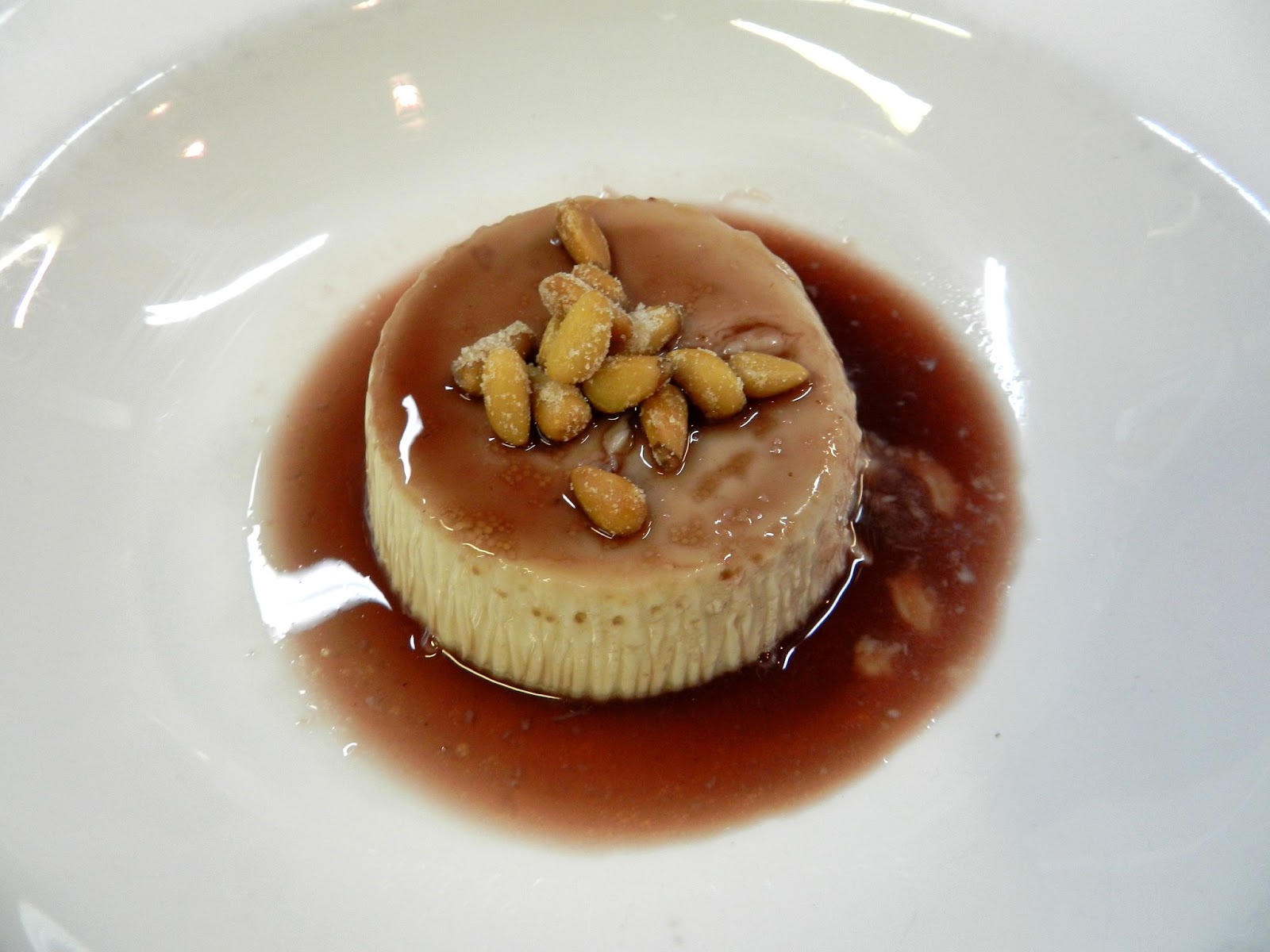
Chestnut and Red Wine Panna Cotta
Piemonte: Chestnut and Red Wine Panna Cotta. Panna cotta is a classic dish that I associate most closely with the Piemonte. This is a two-layer panna cotta of jellified Nebbiolo wine and a chestnut cream. I have gently reheated the panna cotta so that the red wine layer has just about melted, forming a sauce à la crème caramel. Topped with candied pine nuts.

Friday, July 13, 2012

Chef's Tasting

Here are new photos from a recent tasting.

Shrimp and Mango Seviche; Shrimp and Mango Skewer
Shrimp and Mango. We're planning to do shrimp and mango seviche for a big crowd next week, so this was a test run to get the flavorings down. Served with a shrimp and mango skewer sitting on a bit of mango vinaigrette.

Grilled Opah, Okinawa Sweet Potato, Curry Sauce
Opah. This is opah grilled to about medium sitting on a piece of broccoli and some Okinawa sweet potatoes that we cooked in coconut milk. The now-purple coconut milk was fortified with red curry paste, fish sauce, and lime juice. Topped with a little grilled pineapple salsa.

Lumaconi Stuffed with Pulled Rabbit
Rabbit. The local rabbits are really rolling in now forcing us to get creative in finding ways to serve them. Here we braised them and pulled them off the bones, then created a sauce by reducing the braising liquid and finishing with a little cream and Dijon mustard. The meat and the sauce were combined with sautéed local carrots, leeks, and brussels sprouts, chilled, and stuffed into lumaconi (large snails). We topped the pasta with a touch of béchamel and browned that, then spooned over fresh local peas just barely warmed in butter.

Hummus, Lamb Chops, Phyllo, Olives, Preserved Lemons, Fresh Chickpeas
Hummus with Garnishes. This started as a way to showcase the fresh green chickpeas that a local farmer grows for us. In the center of the plate you see some hummus that we flavored with chile, garlic, and lemon. Sticking out of this is a phyllo crisp that has salt and ras el hanout (a North African spice mix) between the layers. The lamb chops are local and marinated with garlic, more ras el hanout, and ground sumac. Other garnishes are the aforementioned green chickpeas, winy Niçoise olives, and some of our house-cured preserved lemons. Over all is sprinkled a chiffonade of mint from the flowerbed out in front of the restaurant.

Panna Cotta with Black Berries and Anise Hyssop
Panna Cotta. Down on the plate you see a ribbon of three flavors of panna cotta: blackberry, apricot, and blueberry, three of the most abundant fruits right now. The plate is garnished with a little quick blueberry jam, apricot coulis, oat and sunflower seed granola, crème anglaise, honey-lime blackberries, and anise hyssop.

Monday, August 29, 2011

Mystery Basket Dinner

This past Sunday we held a Mystery Basket dinner at our house for some of our customers as a way of thanking them for their business. We drew names from all those who had entered at the restaurant and each winner brought three ingredients that were unknown to me. When everyone arrived and had a glass of wine, we unveiled all the ingredients. And here is the sum of what everyone brought; I contributed the hickory bark syrup just for grins.

beets
pom pom mushrooms
bison sausage
Walla Walla onions
haloumi cheese
sweetbreads
garlic
tomatoes
red peppers
barilotti pasta
baby bok choy
pink lady apples
rhubarb
hickory bark syrup
bulgur
puff pastry
pomegranates
Dubliner cheese
Italian sausage

As you can see from this list of ingredients, we had quite a crazy melange of foodstuffs from which to concoct a menu. As we were unveiling the ingredients, I was already triaging the foods in my mind, trying to figure out what went where. The quantities of some foods dictated how we would have to use them. The little block of haloumi wasn't going to go too far.

The bulgur suggested a tabouleh, the puff pastry a pizza, and the barilotti a pasta, naturally. That left the sweetbreads and the haloumi for appetizers. The menu we ended up with was:

Saganaki: Pan-Seared Haloumi with Sautéed Garlic and Lemon Juice. This is a simple dish to make. Slice the haloumi and place in a hot frying pan with a touch of olive oil. Brown on both sides and remove to a plate. Add chopped garlic to the pan and brown slightly. Deglaze with the juice of a lemon and pour over the cheese.

Sweetbreads with Pom Pom Mushrooms and Baby Bok Choy. Sweetbreads are delicious and pretty easy to prepare. I showed everyone how to poach them, then how to remove the membranes and veins. Once they were cooled, we tossed them in seasoned Wondra and seared them well in a skillet. Then we slabbed the pom pom mushrooms and seared them and after that, we wilted the baby bok choy in a good quantity of olive oil and garlic. We arranged all these goodies on a platter and dug in. I had never worked with farmed pom pom mushrooms before, only the wild form that I have known as lion's mane. The mushrooms had a slight crab-like flavor, very mild and subtle. Image courtesy of Mike Hoffmaster.

Tabouleh with Pomegranates, Pink Lady Apples, Beets, and Rhubarb. This was the sleeper dish of the evening and my catch-all for all the red-colored ingredients for which we had no other use and it was the one dish that I cooked myself. I don't think anybody didn't have seconds of this tabouleh: it was that good. I started by cooking the bulgur, some fancy organic long-cooking kind that took a lot of persuasion in the microwave to get cooked, and by roasting the beets in foil in the oven, the single best way to handle beets that I know.

Everyone got a kick out of my beating the hell out of the pomegranate with a wooden spoon to get the seeds out; the whole thing was seeded and ready to eat in 30 seconds. I marinated raw rhubarb in a lot of hickory bark syrup to tame its rampant acidity, then threw it in with the pomegranate seeds, diced apples, and diced beets, to which I added a lot of lemon juice, chopped Italian parsley from my garden, minced garlic, and extra virgin olive oil. I mixed it all and the whole thing turned scarlet and after correcting the seasoning, it was truly delicious.

Do note that rhubarb contains oxalic acid, which in large quantities can be toxic. Most of the oxalic acid is confined to the leaves, which is why they are not eaten. Cooking neutralizes the oxalic acid and many texts suggest to always cook rhubarb, but it can be quite delicious when eaten raw.

Puff Pastry Pizza with Buffalo Sausage, Caramelized Onions, Cherry Tomatoes, and Dubliner Cheese. Everybody was in a pizza kind of mood, so I rolled out the puff pastry on a sheet tray, built a rim around it with a second layer of puff, docked the bottom, and pre-baked it to about half done. Next it got a good layer of caramelized onions, buffalo sausage, halved tiny tomatoes, and a topping of Dubliner cheese for good measure. What's not to like?

Barilotti with Spicy Italian Sausage, Onions, Tomatoes, Red Peppers, and Basil. I'd never seen this cut before, barilotti, little barrels, but I like it. I'm a big fan of short pasta cuts and this reminds me of cavatelli, also a very favorite cut. These little barrels are the perfect shape for a sausage pasta because they have the perfect nooks in which sausage bits can hide. All the ingredients were sautéed in turn with copious amounts of garlic and fresh basil, then tossed with the hot pasta, some pasta cooking water, and a big handful of grated pecorino romano. Awesome!

Candids

Cleaning sweetbreads.*

Chef Mike tackles a mound of onions.*

Jimmy, zesting lemons.*

Was it my imagination or were the women outside kibbitzing while the guys did all the work?*

To be fair, Julie helped EJ a lot and Jen had a broken wrist. What about Ann? She was social directing!*

Grayce, the canine vacuum cleaner.*

And Dewi, the human vacuum cleaner.

The crew.

*Image courtesy of Mike Hoffmaster/Dennis Trimarchi.

Thursday, June 3, 2010

25th Anniversary 9-Course Vegetarian Tasting

Earlier this week, we did a nine-course vegetarian tasting menu for a couple's 25th wedding anniversary. In some respects, the timing was good, this being the last week for local asparagus and sugar snaps, and being the first week for English peas. In other respects, doing vegetarian menus before the onset of the summer vegetables such as squashes, peppers, tomatoes, and eggplants poses its challenges.

This menu is truly a menu of the season and was inspired in large part by what we found at the farmers market and what our growers brought to us: green garlic, garlic scapes, sugar snaps, English peas, fava beans, fennel, asparagus, dandelions, mulberries, morels, and shiitake mushrooms.


Sopa de Ajo. Creamy Soup of Local Green Garlic; Roasted Garlic Scape; Garlic Scape Pesto. This was inspired by the abundance of green garlic and garlic scapes that we have from thinning our garlic and keeping them from blooming so that they will focus on making garlic bulbs. Wine Pairing: Feffiñanes Albariño Rias Baixas 2008.


Fennel. Salad of Fennel Confit, Fennel Latke, and Fennel Slaw; Pernod Cream. We have so much fennel on hand now that we are looking for creative ways to use it. Fennel confit was marinated in herbs, garlic and olive oil then grilled and then poached in olive oil for 10 hours. The greens you see are red-stemmed dandelions. Wine Pairing: White Hall Vineyards Viognier Virginia 2008.


Spring. Sauté of Morels, Peas, Sugar Snaps, Favas, and Garlic Scapes; Achiote Pasta. This was conceived as an open-faced raviolo showing off all the spring vegetables on hand. The morels and veg were cooked in the Tuscan style called trifolati, in the style of truffles, with butter, garlic, and lots of fresh parsley. There's no better spring sauté in the world! Wine Pairing: La Slina Gavi di Gavi 2008.


Napoleon of Local Shiitake Mushrooms. Roasted Shiitakes; Crispy Goat Cheese; Crispy Shiitake Bits; Balsamic Gel. I love shiitakes and goat cheese together (anybody remember my shiitake polenta with herbed goat cheese mousse?) so the napoleon flowed naturally from the disk shape of the mushrooms and the cheese. We wanted some bacon for this dish; the crispy shiitake bits do a great job standing in for the bacon. Balsamic vinegar works really well with shiitakes too. I wanted to use the balsamic as a plate garnish but didn't want to reduce it and get that muddy caramelized balsamic flavor, so I gelled it. Wine Pairing: Swedenburg Pinot Noir Virginia 2008.


Vegetarian Yiouvetsi. Baked Orzo with Tomatoes, Artichokes, Preserved Lemons & Local Goat’s Milk Feta. My Greek friends know that I'm a fairly deft hand with a traditional yiouvetsi, baked orzo with lamb and tomatoes, redolent with olive oil, lemon, and fresh oregano, topped with feta cheese. I had heard of Michael Psilakis doing a vegetarian one, but I never knew what he put in it. That idea has been in the back of my brain for a long time and I am happy to have had the chance to bring it to a menu. This one contains tomatoes, onions, artichokes, house-cured preserved lemons, and garlic scapes. It may not look like much in the photo, but the flavors are intensely amazing. Thanks to Alan at Spriggs Delight Farm for the feta. Wine Pairing: Dupeuble Beaujolais 2008.


Panisse. Fried Chickpea Cake; Smoky Chickpea Salad; Roasted Red Pepper Hummus. For red wine vegetarian courses when tomatoes are not in season, I look to paprika and last year's roasted red peppers. And I love chickpeas. I eat them every day; they are my primary source of protein. This then is a loving homage to the many forms of chickpeas. Note to anyone listening: we tried to make the smoky chickpea salad with fried chickpeas, thinking we could get them crunchy. Instead, they just got leathery and no bueno. Wine Pairing: Borgia Campo de Borja 2008.


Stuffed Piquillo. Sweet Red Piquillo Pepper Stuffed with Israeli Couscous in the Style of Paella. You may have seen me make this couscous on WVPT. It is a customer and staff favorite because the flavors are so amazing. The couscous is flavored with sweet yellow and red peppers, artichoke hearts, yellow onions, green onions, tomatoes, saffron, garlic, and pimentón. And piquillos are the best tasting red pepper in the world. All in all, a terrific dish. Wine Pairing: Finca Sobreño Toro 2005.


Cheese Plate. Artisanal Cheeses; Mulberries; Caerphilly-Pecorino Crackers. I don't eat sweets after a meal; they just don't appeal to me. But I love to finish dinner with cheese and a glass of wine so when the customer told me he'd like to finish dinner with cheese, he was talking my language. I foraged some mulberries and made some crackers to accompany the three artisanal cheeses, one each from New York, Wisconsin, and Virginia. Wine Pairing: Linden Claret Virginia 2006.


Gorgonzola Cheesecake. Candied Walnuts; Port Reduction. Another riff on the cheese theme to end dinner is my subtle gorgonzola cheesecake made with Gorgonzola Dolce. This is my kind of way to finish a meal: all the classic port accompaniments reworked into a dessert. Wine Pairing: Warre’s Otima 10-year old Tawny Port.

Friday, March 26, 2010

Chef's Tasting


"Cockles and Chorizo", Wine Pairing: Broadbent Vinho Verde 2008


"Shrimp Cocktail"—pickled shrimp, caperberry, baby cucumber with bloom, glass rimmed with cumin salt, cocktail: tomato juice, mussel broth, lime juice, cilantro juice, cumin, sherry vinegar, gold tequila


"Piquillos and White Beans"—parfait layers of brunoise of piquillo pepper and Tuscan "refried beans," green layer flavored with pesto, tan layer flavored with rosemary, Wine Pairing: La Slina Gavi di Gavi "Giorgio Cichero" 2008


"Morel Risotto"—onion and Carr Valley Shepherd's Blend cheese risotto napping a hidden poached quail egg (surprise!), crispy morel mushroom, Parmesan tuile, fresh thyme leaves, Wine Pairing: Clifton Springs Pinot Noir Sonoma Coast 2007


"Duck and Veal Ravioli"—raviolo stuffed with Moulard duck and local veal ragù, roasted romanesco, romanesco brown butter mousse (killer!), Wine Pairing: Cristom Syrah Willamette Valley 2005


"Oxtail Empanada"—chimichurri down on the plate, shredded oxtail, crispy polenta, radishes, pickled cipollini, pea shoots, johnny jump ups, Wine Pairing: Boxwood Winery "Boxwood" Virginia 2007


"New York-Style Cheesecake"—mini cheesecakes, poached dried apricots, almond brittle, Moscato d'Asti sabayon, crumbled amaretti, Wine Pairing: Vietti Moscato d'Asti "Cascinetta" 2008

Tuesday, February 2, 2010

Risotto of Israeli Couscous in the Style of Paella

Wow! That title is a mouthful! In this recipe that I demonstrated on a recently taped segment of WVPT Cooks, I cook couscous somewhat in the manner of risotto and flavor it in the manner of paella. It really is a wonderful vegetarian dish that I would willingly eat several times a week. It would also be very good with a little chorizo and studded with shellfish such as mussels, clams, and shrimp, if you like.

First, a word on couscous. In this photo, on the left you see the traditional couscous that you probably already know. I'm finding that very few people are familiar with the larger Israeli couscous on the right. Traditional couscous is made from semolina, hence its yellow color. Israeli couscous is made from very fine durum flour and is whiter. You "cook" modern couscous merely by refreshing it in very hot water or by steaming it, whereas Israeli couscous is generally boiled in water like any other pasta.

In making my "risotto," the texture is best when I start with Israeli couscous that has been precooked for about five minutes.

Risotto of Israeli Couscous in the Style of Paella

extra virgin olive oil
1/2 poblano chile (or green pepper), diced
1/2 red pepper, diced
1/2 yellow pepper, diced
1/2 orange pepper, diced
1 clove garlic, finely minced
salt & pepper
1 pinch saffron
2 teaspoons pimentón (smoked paprika)
1-2 cups vegetable broth or water
2 cups Israeli couscous, par-cooked for five minutes
3 green onions, thinly sliced crosswise
4 artichoke hearts, quartered
10 grape tomatoes
1 tablespoon butter
1/2 cup pecorino cheese, grated

In a large sauté pan, heat the olive oil over high heat and sauté the peppers for two to three minutes. Add the garlic, a pinch of salt and pepper, the saffron, and pimentón and let cook for another minute, stirring well to distribute the spices.

Add a cup of broth or water and the couscous. Stir together well and continue to cook until the couscous is hot and cooked through, another minute or two. Add more water or broth as necessary to adjust the consistency to your liking.

Add the green onions, artichoke hearts, and tomatoes and stir while they warm through.

Stir in the butter and cheese and serve immediately.

Saturday, January 16, 2010

Pasta e Fagioli

Winter always finds me cooking comfort food for myself and my family and among my very favorite comfort foods is pasta e fagioli, the classic Italian pasta and bean dish that is associated primarily with Tuscany, home of the mangiafagioli, the bean eaters. Like the recipes for most comfort foods around the world, the recipe for pasta e fagioli varies widely, sometimes a soup, sometimes a thick stew, sometimes with tomatoes, sometimes without, sometimes with red wine, sometimes with white—you get the idea. With no further introduction, then, here is my version. Please enjoy.

Pasta e Fagioli

extra virgin olive oil
3-4 ounces pancetta, in small dice
1 carrot, in small dice
1 onion, in small dice
2 stalks celery, in small dice
12 fresh sage leaves, finely minced
4 sprigs fresh Italian parsley, finely minced
8 branches fresh thyme, leaves picked
1 small branch rosemary, finely minced
salt and pepper, to taste
8 cloves garlic, minced
crushed red pepper flakes, to taste
2 tablespoons tomato paste (Italian doppio concentrato)
½ cup dry white wine
2 cups broth or water
½ pound dried cannellini, soaked and precooked
   (or 2 15-ounce cans cannellini)
1 pound ditalini
Grated cheese

Film the bottom of a heavy soup pot with extra virgin olive oil. Over high heat, cook the pancetta, onions, carrots, celery, fresh herbs, and a pinch of salt and pepper for several minutes, until the vegetables start to brown.

Add the minced garlic, red pepper flakes, and the tomato paste. Continue to cook, stirring often, until the garlic smells wonderful and the tomato paste starts to caramelize on the bottom of the pan.

Pour in the white wine and deglaze the bottom of the pan. Let the wine evaporate by half, then add the broth or water. Instead of broth or water, you could use bean cooking broth or even pasta cooking water. Add the beans and bring up to a simmer.

While the beans and vegetables are marrying over a low flame, bring the pasta water to a boil and cook the ditalini to almost done. Strain the ditalini and add to the beans. Adjust the liquid and seasonings to your liking.

Serve in deep soup plates and drizzle extra virgin olive oil over the top and sprinkle with grated cheese. Pasta e fagioli pairs brilliantly with a simple light Italian red such as a Langhe Nebbiolo or a Tuscan Sangiovese.

Friday, January 8, 2010

Vodka Sauce

This winter, I put a pasta with vodka sauce on the lunch menu and because the sauce is so good, we've started cooking our mussels in it as an alternative to the usual à la marinière preparation.

I have always wondered if adding an essentially flavorless alcohol to tomato sauce was just a gimmick. [Vodka pedants, we all know good vodka has flavor, just like good bottled water has flavor, but when compared to tomatoes, it might as well be flavorless, so don't go there!] Qualitatively, I do know that my vodka sauce is really, really tasty. But, what role if any does the vodka play?

I always macerate my crushed red pepper flakes in the vodka before adding it to the sauce to make a spicy red pepper extract, much in the same way that I make vanilla extract by putting vanilla beans in a bottle of inexpensive vodka. Clearly the capsaicins (the alkaloids responsible for the burn) are freely alcohol soluble; the vodka becomes very spicy. If the vodka does nothing else in my sauce, it does promote an even spicing of the sauce. Capsaicins are notably insoluble in water, hence drinking a glass of water does nothing to ameliorate the burn in your mouth.

But does the vodka do anything for the tomatoes?

The popular food literature is replete with sayings such as "the alcohol in the vodka enhances the flavor of the tomatoes." But I can't really find any specific reference in the scientific literature to confirm this. What I do see is that there are several patents for processing tomatoes that begin by macerating the tomatoes in food-grade alcohol (e.g., US Patent 5436022), so I surmise that some of the key flavoring agents in tomatoes must be more alcohol soluble than water soluble.

Sorry for getting so technical. I just want to know why my vodka sauce tastes so damned good! Anybody out there have any ideas what role alcohol plays in tomato sauce?

Wednesday, March 18, 2009

On Pasta

I live on pasta, I crave it, I thrive on it, and it provides 90% of the protein in my largely vegetarian diet. Atkins bewildered me and the current low glycemic index diets scare me; I have to have my pasta. I know how the majority of Italians feel: a day without pasta seems incomplete. Though there's not one drop of Italian blood in me, I have the pasta lust in my soul.

To start this story, we need to wind the clock back a good many years. How is it possible that I have been out of college for a quarter century and just who was it that put my life on a speeding bullet train anyway? I was just out of grad school and for the first time ever was living on a budget that was not mere subsistence level. Before that, whatever money was left over after the rent and beer runs went to food. And by that, I mean mostly dried beans. For years, my food budget was around a dollar a day.

At the point where I finally had a little spare cash in my pocket, one of my coworkers was what we would recognize today as a foodie, although that term would not come into use for another 15 years. One day at lunch, he told me that he would only use DeCecco brand pasta because it was head and shoulders above the rest of the brands on the US market. These were the days when you had to find a speciality Italian grocery to purchase DeCecco; it wasn't on every supermarket shelf as it is today.

I wasn't really sure why he was making all this fuss over something so simple as pasta. Pasta was not a big thing at my house when I was growing up. We did eat it, but it was mostly spaghetti, and it was always one of the American brands such as Ronzoni or San Giorgio, both of which are made in a factory not three miles from where I sit typing this. I don't suppose there were any choices other than the standard American brands on the grocery shelf when my mother went shopping at the Safeway. And, I think she bought pasta on price, whichever was cheapest when she needed it was what came home.

So while I had been exposed to several brands of pasta, they were all pretty much the same to me and I was indifferent to them. The idea that there could be big differences between brands seemed an alien concept at the time. But, I did like to eat and cook and at my friend's urging, I spent some of my newfound money on a box of DeCecco pasta. And my life changed.

The great revelation that all pasta is not created equal started me on the road to understanding that in food, quality is everything. Before this point, I had taken a lot of foods including pasta for granted. After this point, I started exploring all kinds of foods and learned that there are vast and easily detectable differences in most foods. There's a world of flavor and texture difference in salt; olive oils are vastly different. And so forth and so on.

Once I discovered that pasta could be really good and not just something to fill up the stomach, it became a great food source for me. And coincidentally, it was just at this time that America started awakening to the joys of Italian food and we saw the proliferation of books by the likes of Marcella Hazan and Giuliano Bugialli. This brought pasta, especially fresh pasta, to the American kitchen. For a time, Bugialli was everywhere at once making fresh pasta.

It came to be in the late 1980s that you were no kind of cook if you didn't make your own pasta; foodies didn't use box pasta; foodies made pasta. So, I went through my fresh pasta phase with the rest of America and although I can still go right in the kitchen and knock out tagliatelle, taglierini, or maltagliati in dozens of hues and flavors, I no longer make fresh pasta except when I'm making ravioli or agnolotti.

Fresh pasta always left me lukewarm just like Mom's American spaghetti and it took a few months to understand why. Ultimately, I came to understand that even though fresh pasta was all the rage, for me, factory made boxed pasta was preferable. Fresh pasta lacks the tooth that dried pasta brings to the plate. And it is this al dente quality that I love so much about pasta and which drives me to seek out the larger, thicker cuts in preference to the thin cuts such as capellini and vermicelli.

Now looking back and having cooked thousands of pounds of pasta in over a hundred shapes and sizes, I still marvel that I can walk into most grocery stores and find not just Italian pasta, but a choice of brands. As a country, we've come a long, long way since I discovered that pasta is good.

And back to the light blue box that changed my life. DeCecco pasta is still rock solid across the entire product line and remarkably consistent from box to box, from year to year, from wheat crop to wheat crop, and decade to decade. I still eat a lot of DeCecco, but at home and at the restaurant, we've switched primarily to a no name brand made in Gragnano, the pasta capital of Italy. Our no name brand just feels and cooks slightly better than DeCecco, but because of the artisanal nature of their company, the range of cuts is extremely limited, so that leaves a lot of room in our pantry for the light blue boxes as well.

All great pasta including DeCecco and our no name brand is forced slowly through rougher bronze dies, rather than smoother modern Teflon-coated ones. The extra friction of the bronze dies slows production to a crawl when compared to the Teflon dies, but great pasta makers still use the traditional bronze dies. Why? Because if you taste samples of bronze pasta next to Teflon pasta, you can feel the difference. The rougher bronze die produces a rougher pasta. Not only is it less slick when cooked, sauce adheres better too.

If you never imagined that there could be vast differences in something as seemingly simple as pasta, perhaps you're in for a revelation of the sort that I experienced so long ago.

Thursday, December 25, 2008

Winter Squash

I am doing a lot of tidying of the restaurant web site. Here's an article that I just found laying around in the depths of the site. I wrote this originally for the Winchester Star some years ago and have updated it for the blog. I figured it wasn't doing a lot of good just laying around in cyberspace and it seems a timely enough topic. We're using a lot of winter squash at the restaurant right now.

Many people know winter squash, the hard-fleshed, hard-skinned squashes that store well over the winter, from sweet preparations, if at all. However, there is a whole savory world of uses for winter squash. You’ll find some of the winter squash recipes and ideas from the restaurant below.

All winter squashes in the US belong to the gourd family (Cucurbita) that includes summer squashes, melons, and cucumbers. We generally see Butternut, Acorn, Hubbard, Long Island Cheese, Fairy Tale, and various Pumpkins in the markets in Winchester. From time to time, we also see Kabocha, Delicata, and Cushaw squashes and Turban Gourds in the market.

From a cooking perspective, these squashes are interchangeable (as are sweet potatoes) and are excellent in soups, baked, roasted, scalloped, in gratins, mashed, and sautéed.

These squashes get their deep orange and red colors from carotenes (notably beta carotene), which are precursors of Vitamin A, thus winter squashes are good sources of Vitamin A and some also have a fair amount of Vitamin C as well. Winter squash are generally good sources of antioxidants. They also happen to taste great too.

There are two main preparation techniques for these squash. Either you split them, roast them, and scoop out the flesh to get a purée, or you peel and slice the squash raw. In either case, you must have a very sharp and heavy knife to work with the hard-skinned and hard-fleshed winter squashes.

Roasted Butternut Squash Soup with Country Ham and Leeks

Here's soup that I have been making for more than 20 years. If you don't want the ham or don't have any, omit it. The real trick here is in making sure that you caramelize the squash very well. You don't have to caramelize it at all, but that is what makes my soup so much better than the average soup.

1 medium butternut squash, 3-5 pounds
extra virgin olive oil
salt and pepper
1/4 pound country ham
1 large leek
1 sprig of fresh thyme

Peel, seed, and chop the butternut squash into cubes. Make sure that the cubes are all roughly the same size so that the squash will roast uniformly. Place the squash in a roasting pan and coat with olive oil and a little salt and pepper. Toss well to cover thoroughly and place in a hot oven to roast. Turn every five minutes or so until all sides are well caramelized.

Meanwhile, dice the ham into small pieces and clean and chop the leek. In a sauté pan, add the ham and a little olive oil and cook the ham until it is well caramelized. Add the leeks at this point and sauté until they are soft, a minute or two. Place the ham and leeks in a soup pot. Deglaze the sauté pan with a little water to remove the caramelization on the bottom. Add the pan juices to the soup pot.

Place the caramelized squash in the soup pot and add water to cover. Add the thyme sprig. Simmer for 20 minutes and remove the thyme sprig. Place the soup in a blender and carefully blend until smooth. Thin with water or stock as needed. You can omit the ham to yield a vegetarian soup. Garnish with tiny dice of sautéed apples finished with honey, a swirl of crème fraîche or sour cream, and fresh thyme leaves.

Roasted Winter Squash and Onions

Nothing could be easier; what a simple side dish for a roasted fowl or joint of meat! I also do the same thing with summer squash as a side for fish or fowl in the summer.

1 winter squash
1 large yellow onion
2 large garlic cloves
extra virgin olive oil
salt and pepper

Peel and seed the squash. Slice into uniform slices 1/8” thick. Slice the onion into similar slices. Slice the garlic into fine slices. Add all vegetables to a roasting pan and toss with olive oil, salt, and pepper to coat. Roast in a hot oven, turning occasionally until the vegetables are just soft, about 10-15 minutes.

Winter Squash Gnocchi

Gnocchi is one of those dishes that is an acid test of a chef's ability. Gnocchi takes a very light hand: not enough flour and it falls apart; too much flour and the result is gummy and leaden. This shouldn't discourage you from making gnocchi, but if you're just starting out, use (russet) potato until you get the hang of it. Potato is easier and cheaper, in case you have to toss out the result. I have a very good friend who begs me to make gnocchi for her every time she comes to the restaurant. She keeps me in practice.

1-1/2 cups squash purée
nutmeg
1 egg
1 to 1-1/2 cups flour

Bring a pan of salted water or stock to a simmer on the stove. Mix the squash purée and the egg. Grate a little nutmeg into the squash. Add 1/2 cup of flour and gently mix. With your hands, gently knead in another 1/2 cup of flour. Mix as little as necessary. If the dough is too sticky, gently add more flour until you have a dough that you can roll out in 3/4-inch diameter logs. Cut the logs into one-inch sections. Roll down the back of the tines of a fork to give the gnocchi little ridges. Drop the gnocchi in small batches into the simmering water or stock. Simmer until they float, about 6-8 minutes. Drain and dress with butter, with sage butter, or a wild mushroom sauce.

Note: you shouldn't need an egg for potato gnocchi. Squash is so comparatively wet that it needs the extra protein from the egg to bind it.

Roasted Winter Root Vegetables

This is a great accompaniment to any roast meat or fowl.

Cube any or all of the following vegetables, toss with olive oil, salt, pepper, and roast until just tender.

Winter squash
Turnips
Parsnips
Sweet Potatoes
Rutabagas
Potatoes
Carrots
Celery Root

Mashed Winter Squash

Here's a great alternative to mashed potatoes to have in your repertoire.

Split a large squash into quarters or eighths, if really large. Scoop out all seeds and fibers. Brush with oil and place into a medium oven. Roast until the flesh is soft and readily pierced with a fork. Remove from the oven and scrape out the flesh. Put the flesh through a ricer and then add about one tablespoon of butter per cup of squash purée. Whip well with a spoon. Add nutmeg, salt, and pepper to taste. For a different taste, omit the nutmeg and add grated orange rind.

Winter Squash Ravioli with Sage Brown Butter

Here’s an elegant first course that is easy to do provided that you are adept at making pasta. Making pasta is another one of things like making gnocchi that takes a little practice, but isn't really that hard.

Roast and purée a squash as per the previous recipe. Return the purée to a saucepan and cook gently until the purée is very thick. Stir in a tablespoon or two of butter. Season as you feel inclined—I like nutmeg, thyme, or sage and salt and pepper.

Lay one sheet of very thin pasta on your cutting board. Place a meager tablespoonful of filling on the pasta in rows about three inches on center. Brush around the filling with water or egg white. Lay a second sheet over the first. Press down gently, squeezing out any air bubbles. Seal well around the filling. Using a cookie cutter or pastry wheel, cut out the ravioli. Let dry uncovered for about a half an hour.

Bring water to stock to a bare simmer. Cook the ravioli just until the center is heated, not much more than two minutes. I look for the ravioli to float.

To make sage brown butter, melt a quarter pound of butter over high heat. Finely mince 4-6 fresh sage leaves. As the butter starts to brown, squeeze in the juice of half a lemon, add the sage leaves, and stir well. Remove from the heat. Season to taste.

Monday, April 21, 2008

Fregola Sarda

"What is fregola sarda?"

In recent days, this is a frequently asked question in the dining room. Fregola, pronounced FREG-o-lah or FRAY-go-lah, is a tasty Sardinian pasta that we enjoy for its nutty flavor. As you can see in the picture, it fairly resembles Israeli couscous, another favorite pasta here at the restaurant.

But there are two big differences between the two pastas. In the photo, you can clearly see that fregola is not a consistent color. The pasta bits are toasted after they are dried, changing the color and more importantly, yielding that nutty flavor that is so addictive. The second difference is that fregola is made from coarse semolina, so it has a good bit more rustic character than more refined pastas such as Israeli couscous.

I'm still exploring the boundaries of what you can do with fregola. I do know that it works extremely well in soup, softening without becoming mushy. I also know that when I boil it until it is soft, about 25 minutes, I can make a hell of a flan with it by baking it in a savory custard base. Fregola flan makes a dramatic and sensuous base for grilled and roasted meats.

A natural thing to try is to cook it risotto style and I have done so with outstanding results. It makes a great pilaf, a great ersatz tabouleh, an unusual biryani, an off-the-wall posole, and so many other things. I even substituted it in clam chowder in place of potatoes—yum!

The way that we most use it here at the restaurant is to cook it, chill it, and reheat it at service with a little butter and Pecorino Romano cheese. It's hard to beat this as a neutral foil for a roast or grilled meat.

Available on the web and at retail for $5-$7 per pound and well worth it. Yes, pricey in terms of pasta, but you can stuff a family of four on fregola for $6, a bargain by almost any measure.