Showing posts with label sorrel. Show all posts

Saturday, April 21, 2012

"Spring"—A Chef's Tasting

We just did a Chef's Tasting on Thursday night with the theme of Spring. We decided to let the menu be informed by not only the ingredients that are available now in the spring but by the ideas and memories evoked by the season.

I am really pleased with this menu and think that it clearly states who I am as a chef right now and speaks to the food that appeals to me: simple, fresh, direct, highly flavorful, yet still a bit whimsical and playful, not too serious for its own good. I like this menu because the dishes are largely pared to their essence—not too many ingredients on the plate, but just enough. It is very difficult as a chef to pare dishes to their core: it forces excellence in the thought behind a dish, the ingredients themselves, and of course, in technique.

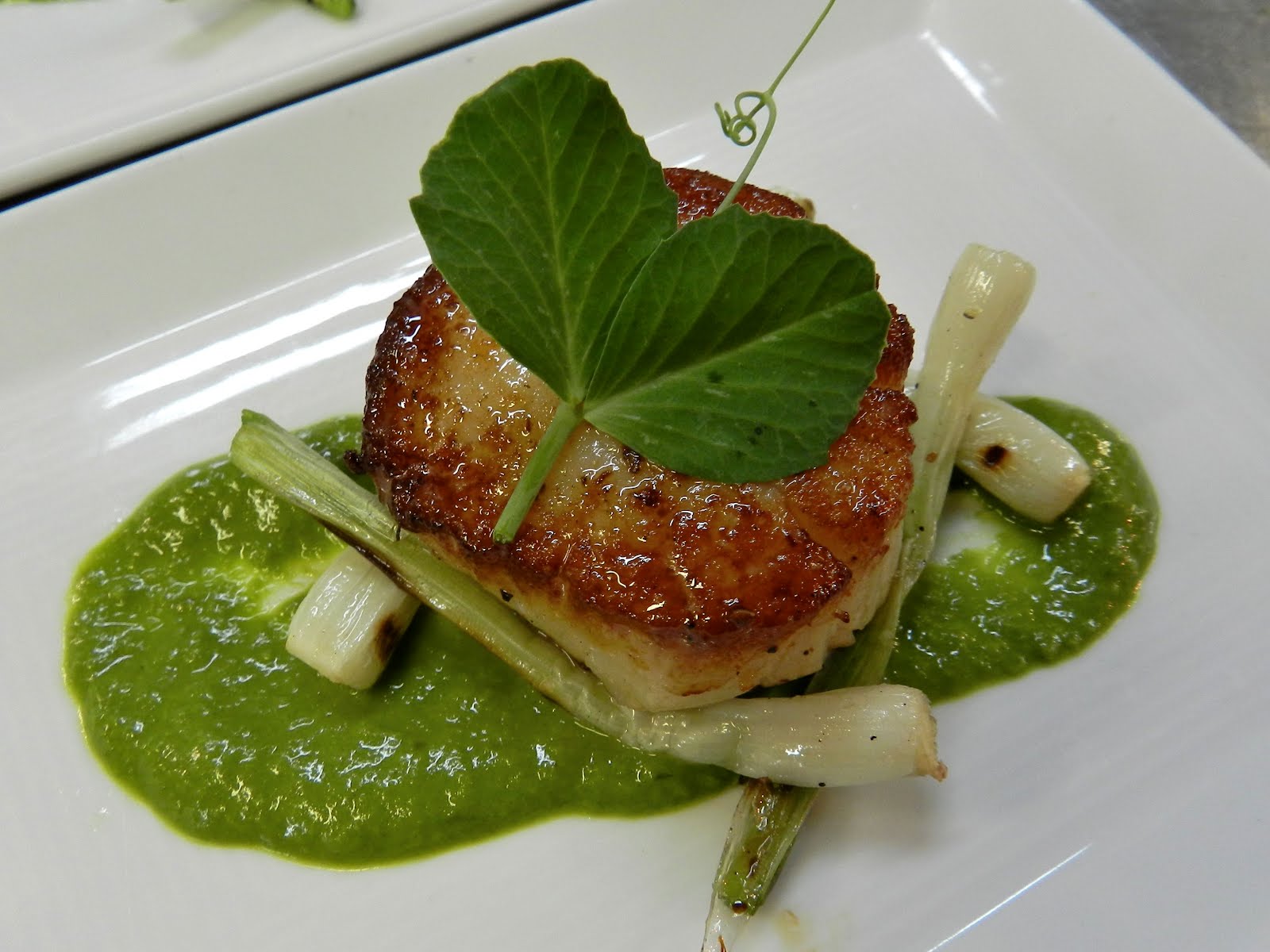
Sea Scallop. Spring always brings great scallops as new grounds are opened. I wanted to highlight our beautiful scallops against some of our local spring greens. The scallop is sitting on a purée of ramp greens and grilled baby spring onions and topped with a sugar snap tendril from my garden. The ramp bulbs have long since vanished into sopa de ajo.

Arctic Char. Spring always has me looking forward to salmon as it begins its spawning run up the rivers. It's just a little too early yet for salmon, but we do have two nice salmonids in house right now, arctic char and steelhead trout. Last week, we put up a batch of cured steelhead trout, so-called gravlax of steelhead trout, and we had a bunch of trimmings to work with.

On this plate, you see a mousse of roasted steelhead gravlax, fennel fronds from my garden, very lightly pickled hothouse cucumbers, seared arctic char, and a wonton containing gravlax, chives, and sour cream. The wonton came from wanting some crunchy element on the dish. And in the end, we decided to take the traditional bagel toppings and put them inside a crispy wonton as a somewhat cheesy (pun intended) nod to the God-awful crab rangoon served in ersatz Chinese restaurants. A little humor never hurt a dish as far I can tell.


Eggs, Bacon, and Toast. Now that spring has sprung and the days are getting longer, Sarah's ducks are cranking out far more eggs that we can possibly use to make our pastries. [Oh by the way, wondering why our pastries are so good? Blame the duck eggs!] So this dish was born of a need to consume duck eggs and of course also to showcase our awesome house-cured Berkshire pork belly.

Down on the plate, you see grilled and buttered focaccia topped with maple syrup-braised pork belly and a poached duck egg. We went through a dozen different plate presentations and finally in the spirit of consuming as many duck eggs as possible, decided to benedictify it with a lemon zest-augmented hollandaise. This sublime stack of wanton sinfulness is bejeweled with a crown of cilantro flowers from my garden.


Risotto. This dish didn't start as a risotto at all. For the longest time, it was just a list of ingredients: asparagus, morels, and duck confit. Our guests were very lucky that the first asparagus and the first morels of the year arrived in our kitchen simultaneously, lucky because they are ingredients that marry in the best kind of way. Morels, the king of mushrooms (you bolete fans are all wrong), deserve, no, they cry out for cured pork products. And what is better than cured pork? Our house-cured duck confit all poached in its unctuous duck fat bath!

So we had three awesome flavors that needed a neutral base to carry them and hence the risotto entered the picture, the rice marrying the ingredients and serving as a base for the garnishes: grilled asparagus, chive blossoms from my garden, and a morel dipped in cornstarch and crisped in hot oil. Ambrosial!


Picnic. I don't know what spring has on your mind, but a picnic is definitely on my mind. This dish is our homage to classic American picnic food: fried chicken, deviled eggs, and potato salad. Our fried chicken is an herb-marinated and grilled quail. Our deviled eggs are naturally quail eggs. And our potato salad, well, it is better than most potato salad you will ever eat, is instantly recognizable as potato salad, and yet, contains zero potatoes.

The potato salad is down on the plate letting us stand the boned-out quail up against it with the deviled egg halves nestled against it. Just under the quail and spilling out to the side of the eggs is an outstanding amarena cherry mosto cotto, cherry juice and grape must cooked down to almost a balsamic vinegar like syrup. To complete the cherry metaphor is a bit of dried cherry and celery salsa. Not only is it a great palate cleanser with the sweet-tart cherry working against the bitter crunchy celery, it is a reminder that cherries, that most delicious and first stone fruit of the new year, are just around the corner.

Oh, the potato salad. It's celery root, red onion, green onion, Surry sausage (our local Virginia smoked pork sausage), and parsley, all bound with mayonnaise.


Spring Lamb. No protein could be more spring in my mind than spring lamb and this one just arrived from the slaughterhouse. This lamb is so good that it really didn't need us to do much with it. I made a pesto from the tons of fresh mint growing in the boxes out in front of the restaurant and after boning out the lamb saddle, marinated the deboned loins in the pesto. In the vein of not doing very much with the lamb, I decided to serve it very classically, with pommes duchesse, mashed potatoes augmented with [duck] egg yolks and baked. Although you can't see it, the lamb is napped with a glace d'agneau, a highly concentrated lamb stock that we made from all the bones from the last lamb we received. It is so concentrated that it remains jellied at room temperature. We reheated it with a little white truffle juice.

The herbs I picked from my backyard in the morning. The lower herb in the photo is sheep sorrel which I included because lemony sorrel and lamb is a classic pairing, but also because I found it amusing to pair sheep with lamb! Corny, but true. The yellow blossom and the leaf above it is from a wild mustard plant. Lamb and mustard is a delicious combo. I often will drain the pan juices into a sauce pan after roasting a leg of lamb, add a little red wine, a little lamb glace, and then after straining it, will add Dijon mustard as a liaison to thicken the sauce. That, for me, is what the mustard greens on this plate evoke.


Rhubarb. Before there is any fruit in the spring, there is rhubarb, very much a vegetable, but one that we treat as a fruit. The only question here was how to provide a delicious foil for the sweet-tart rhubarb compote (rhubarb, cranberry juice, and sugar). Spring leads me to light desserts and light always leads me to Greek yogurt panna cotta, this one flavored with lemon zest and poppy seeds. For garnishes, you see a poppy seed tuile and lemon balm from my garden. The surprising element here is the black locust blossoms which had just opened for the very first time the morning of the dinner. I picked these from the backyard and just before serving them, tossed them in a dressing of honey, lemon juice, and lemon zest. The locust blossoms have a flavor at sweet pea crossed with honeysuckle nectar. They are delicious.

Wednesday, September 15, 2010

Recent Photos

Here are a couple of recent photos from the restaurant.


Here is one of our flats of blood sorrel, just waiting to be picked for garnish. Blood sorrel has that great lemony oxalic acid zing of any other sorrel and it looks great on the plate too. We only ever use this in raw applications.


And finally after waiting all summer, our first batch of field peas (aka cowpeas, cream peas, crowder peas) is in. These are the traditional purple hulls (the ones with the eyes) and the cream peas called Zipper, the larger ones without the eyes.

Tuesday, June 23, 2009

Sorrel-Wrapped Mahi Demonstration

Here's a brief photo essay from a recent lunch special that one of my cooks was prepping. It's a good lesson in how to wrap any kind of protein with a leafy green. In this case, we're wrapping relatively mild Mahi Mahi in bright, lemony sorrel.

Sorrel (Rumex acetosa) is not well known in the US and not commonly grown. In fact, we take all we can get from two different growers and it's still not enough for us. The bright lemony flavor is a favorite in our kitchen. If you've ever tasted the shamrock-leaved Oxalis that we commonly call sour grass and gets its sour flavor from oxalic acid, you know the flavor of sorrel, which gets its flavor from a big dose of ascorbic acid.

Sorrel pairs extremely well with mild seafood such as this Mahi and with poultry; roasted chicken with sorrel sauce is a classic.

Here are the lanceolate or arrowhead-shaped leaves of raw common sorrel.


When you blanch sorrel even for just a second, it goes olive drab; it's unavoidable. After blanching, blot the leaves well to remove any water.


Chop the leaves finely and flatten between two sheets of film. Peel the top layer of film off.


Place the raw fish bottom side up on the sorrel and using the bottom layer of film, wrap the sorrel around the fish.


Here's the bottom side of the fish after having been wrapped.


And the top side.

And the finished lunch special with rice wine vinegar-poached dried pears, microgreens, and a plum-sesame sauce. We seared the fish bottom side down in a hot skillet and then finished cooking it in a hot oven.

Wednesday, November 19, 2008

Chef's Tasting

One of my favorite things to do is create tasting menus for customers. I like it because I get to create things that people ought to taste, but which would never sell on the dinner menu.

Here's the menu from the latest tasting. I will follow up this post with another one discussing the development of this menu from a list of ideas to dishes on the plate.

Creamy Parsnip-Leek Soup with Chive Oil and Parsnip Latke

Five-Spice Duck Soup Wonton with Green Onions, Soy- and Ginger-Braised Black Mushrooms, and House-Cured Duck Confit

Lemon-Oil Poached Filet of Idiot Fish
on Lemon and Thai Basil “Risotto” of Fregola Sarda; Blood Sorrel

Tartiflette—Rose Fingerling Potatoes, Virginia Slab Bacon, and Onions Baked under Réblochon Cheese

Trio of Rabbit Preparations:
Prosciutto-Wrapped Brined Loin with Pan Sauce
Crispy Raviolo of Juniper-Cured Confit with Juniper Salt and Gin Beurre Blanc
Rillettes with Asian Pear and Blood Orange Marmalade

Trio of Goat Cheese Truffles:
Pickled Peach and Cajun-Spiced Pecans
Cranberry and Walnut
Blood Orange and Candied Fennel Seed

Sour Cherry Granita; Cherry-Chocolate Mousse with Kriek Sabayon


Creamy Parsnip-Leek Soup with Chive Oil and Parsnip Latke. I love soup all the time, but never more so than when it is cold and last night, as expected, was really cold for November, in the low 20s. I decided on parsnips because they're in the market now, they are so good, and so few Americans have ever tasted them. Except for the parsnips, this was a classic leek and potato soup. I decided to highlight the versatility of the parsnip by garnishing the soup with a latke. Parsnip latkes are even better than potato latkes.

Five-Spice Duck Soup Wonton with Green Onions, Soy- and Ginger-Braised Black Mushrooms, and House-Cured Duck Confit. I love Chinese comfort food, especially the red-cooked dishes, long slow braises with soy sauce, rice wine, star anise, ginger, garlic, and green onions. I also adore Chinese noodle soups, especially hand-pulled noodles in duck broth with roast duck. This dish then pays homage to Chinese tradition, but as I like to play with dishes and make people think about what they're eating, I took the traditional duck soup and put it inside the noodles, making duck soup wontons.

Technically, this is trivially done by letting the broth congeal and then using that solid form to stuff the wontons—no big secret there. Naturally, the broth melts as you cook the wontons. The garnishes are pulled duck confit, dried black mushrooms slowly braised with soy sauce and ginger, hoisin sauce, white sesame seeds, and green onions.

It's kind of fun for customers to cut into the wontons and have the soup bowl fill up with the soup that was missing just moments before.

Lemon-Oil Poached Filet of Idiot Fish
on Lemon and Thai Basil “Risotto” of Fregola Sarda; Blood Sorrel
. After the strong earthy flavors of the previous dish, I felt the need to go light in flavor. Idiot Fish is a delicate, high oil content fish mainly from the Gulf of Alaska. Because it is so delicate, you must handle it gently especially if it is in filets. I decided to seal the fish in a vacuum bag with a lemon-infused oil and gently poach it. I find that lemon (any citrus, actually) works wonderfully with high oil fish. I decided to echo the lemon flavor in the "risotto" of fregola sarda, but to give it a little punch with Thai basil, which adds mint and white pepper notes. Tangy blood sorrel poses its oxalic acid notes against the richness of both the fish and the risotto. We avoided cheese in the risotto: often cheese makes fish taste fishier.

Tartiflette—Rose Fingerling Potatoes, Virginia Slab Bacon, and Onions Baked under Réblochon Cheese. Tartiflette is a modern French classic comfort dish from the Savoie. This rendition is fairly faithful to the original, save that I used rose-colored fingerling potatoes instead of yellow potatoes and that I used Picpoul rather than a local wine from the Savoie. Because of the cold weather, I wanted to do an instantly recognizable comfort dish. And what American doesn't recognize highfalutin home fries with cheese?

Trio of Rabbit Preparations: Prosciutto-Wrapped Brined Loin with Pan Sauce, Crispy Raviolo of Juniper-Cured Confit with Juniper Salt and Gin Beurre Blanc, Rillettes with Asian Pear and Blood Orange Marmalade. After the comfort food of the middle course, I wanted once again to push the customers' boundaries with the next dish. Rabbit shouldn't push anyone's boundaries, but it's not something many Americans have tried or would willingly try, which is why I like to include it on tasting menus: to show people that rabbit is indeed versatile and tasty.

From left to right in the photo, you see classic rabbit rillettes, brined and prosciutto-wrapped loin, and a crispy raviolo filled with rabbit confit. The goal of this tasting was to make use of the entire rabbit.

Rillettes is a classic French charcuterie and what we and the English would most likely call potted meat. It consists of finely shredded or chopped meat mixed with fat (as a preservative) and is typically used as a spread for bread. I braised all the random bits of the rabbit (forelegs, back, breast and side meat, etc.) with thyme, shallots, and white wine. Then I picked and finely shredded the meat and reduced the strained braising liquid to a syrup. Mixing the braising liquid, meat, nutmeg, mace, thyme, juniper salt, rosemary, and a bit of congealed duck fat yielded my version of rabbit rillettes. We served the rillettes at room temperature with a marmalade of blood orange rind and Asian pear.

I trimmed the two loin halves and brined them with salt, sugar, and white pepper for about six hours. Then I wrapped them in prosciutto and seared them. We served them with a pan sauce from deglazing the pan with guinea hen stock (because that's the stock we have on hand right now) and a quick mounting with sweet butter.

To confit the rabbit, I rubbed the rear legs in salt, sugar, juniper berries, garlic, thyme, and allspice and put them in the cooler for several days to cure. Then I slowly poached them in duck fat for about six hours. Finely minced confit seasoned with juniper salt went into the ravioli, which we crisped by frying after they cooked in boiling water. We garnished the ravioli with a gin beurre blanc (like a traditional beurre blanc except that we substituted gin for a portion of the white wine).

Juniper salt is just juniper berries that I ground in the spice mill and mixed with fleur de sel.

Trio of Goat Cheese Truffles: Pickled Peach and Cajun-Spiced Pecans, Cranberry and Walnut, Blood Orange and Candied Fennel Seed. I am a huge fan of cheese. A formal dinner just doesn't seem right to me without a cheese course. And while I rarely eat dessert when I am dining out, I will often order cheese to finish my meal. I used this cheese course to segue between the last savory course and the sweet dessert course by making each of the truffles successively sweeter.

Sour Cherry Granita; Cherry-Chocolate Mousse with Kriek Sabayon. This dessert is about temperature and texture contrast. I wanted to play the crunchy texture of the granita against the smoothness of the mousse and I wanted to contrast the warm kriek sabayon (egg yolks and wine, or in this case, beer whisked over a steam bath until foamy) with the cool mousse. Also, I've never been a fan of sweets, so my desserts tend to be low in sugar. The granita, the mousse, and the sabayon were all barely sweetened.