Showing posts with label shrimp. Show all posts

Tuesday, March 26, 2013

Northern Italian Tasting

We're generally not in the habit of having customers dictate the direction of our tasting menus, preferring instead to take the best ingredients we have on hand at the time and shape them into a menu based on our own whims. But our customer for this dinner was insistent that we do a tasting of the foods from the provinces of Northern Italy. OK. I would have gone to a Northern Italian restaurant for this, but never mind, we can cook pretty much anything.

The hardest part of this whole exercise was deciding the order of the courses; for example, would the Piemontese course be primo, a secondo, a dolce? Once we got the ordering of the courses, progressing from first courses to seafood to meat to sweets, then it was easy enough to draw inspiration from each region to fill in the details.

Chicken Liver "Crostino"
Toscana: Chicken Liver Crostino. Chicken liver crostini are some of the best known appetizers in Tuscany and since we had chicken livers on hand, we decided to do a take on this well known primo, but reinvent the form. We cooked the livers in the traditional manner with onions, sage, rosemary, capers, anchovies, and Cognac. Then we formed the liver mousse into truffles and rolled them finely powdered crostini, cocoa powder, and espresso powder. The bitter cocoa and espresso worked with the liver very nicely.

Speck Knödel/Canederli Tirolese
Alto Adige: Speck Knödel/Canederli Tirolese. We went back and forth on a soup course, but the weather by turning cold and nasty made the decision easy for us. I have always loved the bread dumpling soups of Bavaria, Austria, and the Südtirol and wanted to reprise them for this menu, to show the Germanic influences in the cuisine of Alpine Italy. I made a classic brown stock from both pork and chicken necks and then poached quenelles of knödel batter in it. The batter is white bread soaked in milk, garlic chives, sage, minced speck, and eggs.

Gambero al Prosecco
Veneto: Gambero al Prosecco. I wouldn't argue if you wanted to call this Shrimp and Grits because that is basically what it is. This is our take on the classic Venetian dish of Schie con Polenta, tiny head-on shrimp in a garlic butter sauce over creamy polenta. Making the sauce with Prosecco is a nod to the famous sparking wine of the Veneto.

Trofie al Pesto
Liguria: Trofie al Pesto. You just can't think of Liguria and Genoa without thinking of basil and that most famous of sauces, pesto. What snaps immediately into my mind is a big plate of the local pasta, trofie, in pesto sauce. Plates of pasta just don't look all that pretty on tastings, so we mixed the trofie and pesto with some ricotta and eggs and baked them in little molds so serve as a base for mussels steamed with pesto.

Grilled Trout with Fennel, Chestnuts, and Lardo
Val d’Aosta: Grilled Trout with Fennel, Chestnuts, and Lardo. Moving right up next to France and Switzerland, the next course took its cues from regional products. This dish has no basis in classic Italian cooking: it is one of my own invention, but I daresay that it would feel at home in a modern restaurant in the Val d'Aosta. We grilled trout and then served it with a sauce made from caramelized fennel, shallots, and peeled chestnuts, splashed at the last second with a touch of anisette and bound with a splash of cream. On top is a very thin sliver of house-cured lardo. This dish is a keeper and I look forward to reprising it at some future time in the main dining room.

Radicchio, Wild Mushroom, and Sausage Strudel
Friuli/Venezia Giulia: Radicchio, Wild Mushroom, and Sausage Strudel. As a student of culinary history, I am always amazed at how cuisine pays no heed to political boundaries. For example, strudel, ignoring modern country borders, can be found all over the former Austro-Hungarian empire, including the far northeast corner of Italy. We made our strudel of radicchio, wild mushrooms, and a house-made sage sausage. Although it is very tasty, radicchio goes nearly black when cooked and does not necessarily make the prettiest strudel filling.

"Osso Buco" Milanese
Lombardia: "Osso Buco" Milanese. What is more representative of the cooking of Lombardia than osso buco milanese, succulent veal shank over saffron risotto? Nothing. How do you serve it for a nine-course tasting? We like the arrancino form.

Rabbit Bolognese
Emilia Romagna: Rabbit Bolognese. Emilia Romagna, among others, has two very famous exports: prosciutto di Parma and salsa bolognese from Bologna. We decided to marry a classic salsa bolognese made of rabbit with prosciutto, by wrapping the salsa in prosciutto, to give the salsa form on the plate. It is plated with saffron aïoli and a touch of sun-dried tomato pesto.

Chestnut and Red Wine Panna Cotta
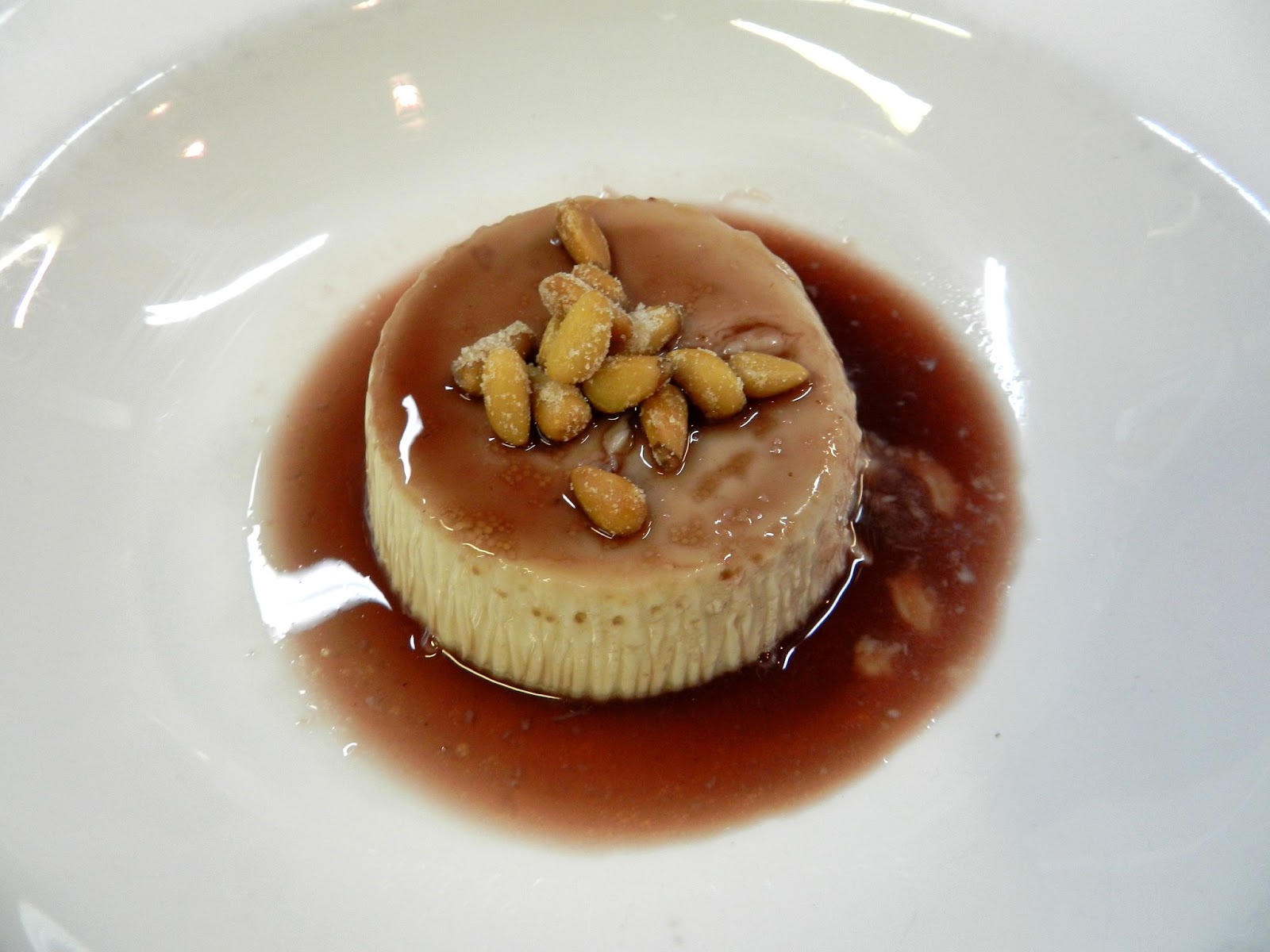
Piemonte: Chestnut and Red Wine Panna Cotta. Panna cotta is a classic dish that I associate most closely with the Piemonte. This is a two-layer panna cotta of jellified Nebbiolo wine and a chestnut cream. I have gently reheated the panna cotta so that the red wine layer has just about melted, forming a sauce à la crème caramel. Topped with candied pine nuts.

Friday, March 15, 2013

Chef's Tasting

Here's a quick synopsis of a menu that we had fun with.

Three Citrus Shrimp Seviche with Chipotle-Lime Cancha
Three Citrus Shrimp Seviche with Chipotle-Lime Cancha. With this dish, we are trying to will spring here. Unfortunately, it's still cold and not quite seviche weather, but a guy can dream, right? Shrimp, three colors of sweet peppers, celery, red onions, green onions, and cilantro, spiced with chipotle, garlic, and cumin, along with the zest and juice of Meyer lemons, blood oranges, and limes. The blood oranges and Meyer lemons don't have enough acidity to make me happy, so we ended up with about three times as much lime juice to get the acidity where it needs to be. The cancha is a toasted dried corn from Peru tossed in a chipotle-lime zest butter; it supplies great texture to the seviche.

Bánh Mì, Our Favorite Sandwich
Bánh Mì. I'm not kidding when I say we love these sandwiches. Thank you Vietnam for one of our most favorite chef snacks of all time! We most often make bánh mì when I have lots of meat scraps from butchering and I get in the mood to make some sausage. This sausage I made from pork belly, pork rack trimmings and cap, rabbit hearts, and rabbit livers. The seasonings are kaffir lime, fish sauce, black pepper, lots of garlic, and red chile flakes. Garnishes are a tangy slaw, nước chắm, slabs of pickling cucumber, carrot threads, and cilantro.

Allspice-Smoked Pork Terrine; "Pickle and Mustard"
Allspice-Smoked Pork Terrine; "Pickle and Mustard". Let me just say up front that I don't like this presentation at all, but we had 60 seconds to get it on the plate, photographed, and on its way to the dining room. There are two cubes of pork terrine that we skewered and smoked over allspice berries, just to see what the hell would happen. We knew the terrine would really take the smoke because it is high in pork liver content and the fat in the liver really binds the smoke. The flavor of the smoke starts a bit herbaceous (infer from that what you will) and finishes a touch floral. There was definitely a hint of je n'sais quoi. The "pickle and mustard" is a bit of a pun in that we almost always serve charcuterie with whole grain mustard and cornichons, but this time, with a pickled mustard plant.

Balsamic-Braised Merino Lamb Spareribs; Risotto Milanese; Fave
Balsamic-Braised Merino Lamb Spareribs; Risotto Milanese; Fave. We're playing with a new high altitude (above the cloud line) Merino lamb from New Zealand and putting it through the paces to see what it is best suited for. Here the spareribs are braised with balsamic vinegar, chilled, and grilled and plated atop a risotto milanese and topped with fresh fava beans. This new lamb is very silky in texture, very fine grained, and very mild.

Carrot-Ginger-Polenta Tatin with Sambuca Crème Anglaise
Carrot-Ginger-Polenta Tatin with Sambuca Crème Anglaise. Dessert is not something that a bunch of line cooks really thinks about, gives a damn about, or even, really wants to eat. So, we end up with more savory desserts without a whole lot of sugar. Somehow, Tarte Tatin popped up during menu discussions only to be followed by "we don't have any fruit" and my reminding the guys that there are lots of vegetables we can treat as fruits for this purpose. Carrots popped up, and then ginger to bring a freshness to the cake, then polenta to give it some mouthfeel, and finally Sambuca as a complementary flavor. The result: customers and cooks alike loved it.

Friday, July 13, 2012

Chef's Tasting

Here are new photos from a recent tasting.

Shrimp and Mango Seviche; Shrimp and Mango Skewer
Shrimp and Mango. We're planning to do shrimp and mango seviche for a big crowd next week, so this was a test run to get the flavorings down. Served with a shrimp and mango skewer sitting on a bit of mango vinaigrette.

Grilled Opah, Okinawa Sweet Potato, Curry Sauce
Opah. This is opah grilled to about medium sitting on a piece of broccoli and some Okinawa sweet potatoes that we cooked in coconut milk. The now-purple coconut milk was fortified with red curry paste, fish sauce, and lime juice. Topped with a little grilled pineapple salsa.

Lumaconi Stuffed with Pulled Rabbit
Rabbit. The local rabbits are really rolling in now forcing us to get creative in finding ways to serve them. Here we braised them and pulled them off the bones, then created a sauce by reducing the braising liquid and finishing with a little cream and Dijon mustard. The meat and the sauce were combined with sautéed local carrots, leeks, and brussels sprouts, chilled, and stuffed into lumaconi (large snails). We topped the pasta with a touch of béchamel and browned that, then spooned over fresh local peas just barely warmed in butter.

Hummus, Lamb Chops, Phyllo, Olives, Preserved Lemons, Fresh Chickpeas
Hummus with Garnishes. This started as a way to showcase the fresh green chickpeas that a local farmer grows for us. In the center of the plate you see some hummus that we flavored with chile, garlic, and lemon. Sticking out of this is a phyllo crisp that has salt and ras el hanout (a North African spice mix) between the layers. The lamb chops are local and marinated with garlic, more ras el hanout, and ground sumac. Other garnishes are the aforementioned green chickpeas, winy Niçoise olives, and some of our house-cured preserved lemons. Over all is sprinkled a chiffonade of mint from the flowerbed out in front of the restaurant.

Panna Cotta with Black Berries and Anise Hyssop
Panna Cotta. Down on the plate you see a ribbon of three flavors of panna cotta: blackberry, apricot, and blueberry, three of the most abundant fruits right now. The plate is garnished with a little quick blueberry jam, apricot coulis, oat and sunflower seed granola, crème anglaise, honey-lime blackberries, and anise hyssop.

Tuesday, January 17, 2012

Alien Ingredient #5: Banana Flower

We were all super excited to get into this banana flower. It looks cool and exotic for starters. I have seen banana flowers for sale before at the big Korean supermarkets, but they have never looked like they were in good condition, so I always passed on them. And interestingly enough, I have never been to a Thai, Vietnamese, or Cambodian restaurant that featured them or I would have tried them out already.

After boning up on our banana flower prep skills on YouTube—who says the Internet is not a great thing?—we peeled this flower down to expose the flowers/immature bananas at the base of each petal.


And then we kept on peeling until we got to the tender heart that we split with a knife. After removing the fibrous core, we put a fine chiffonade on the banana flower and put the bits in acidulated water to keep them from oxidizing.

The taste of the raw flower was of bitter banana rind. We were hoping that blanching would help eliminate the bitterness. Not so. This dish of Banana Flower and Shrimp Curry looks great, but none of us could get beyond the bitterness of the banana flower.


Vote: Two thumbs down. We'd eat it if another chef brought it to our table as a special treat, but we won't be ordering any for ourselves. Major let down.

Friday, March 11, 2011

Chef's Table

Here are more photos from a recent Chef's Table. We had some fun with these dishes. As always, they are a result of collaboration among the cooks and me. In creating these menus, everyone throws in ideas and we see what sticks. Usually some hybrids happen and for the better.


Cucumber Summer Roll. We were kicking around amuse ideas and somehow got onto summer rolls when Tony offered the idea of using cucumber instead of rice paper. I ultimately changed this course from an Asian-inspired one to a more European-flavored one, to bring it in line with the rest of the menu. Inside the roll is cucumber, carrot, parsley stems, and court bouillon-poached shrimp bound with a mayonnaise flavored with lemon zest, dill, and capers. Crunchy with big flavor, yet very refreshing, everything a good amuse should be.


Rockfish. We've been on a fish-in-broth kick for a few tasting menus now (because we love the idea of half soup, half entrée) and so we came quite naturally to rockfish (the local name for striped bass, this from the Chesapeake Bay) with wild mushrooms and a Surry sausage jus. Sometime in the middle of the night before the tasting, I hit me to put the fish on a base of parsnip crème caramel to add some sweetness and richness to the dish. (Don't ask me why I decided this or even how, I don't have a clue. Like most of my food ideas, it just appeared in my brain). The caramel is very dark so it is not very sweet and there is no sugar in the custard. The flavors worked very well and I think the guests were intrigued with the it-looks-like-dessert-but-its-a-fish-dish aspect.


Breakfast. This is just the kind of dish that tickles a lot of chefs and brings out the kid in us. Who doesn't love breakfast for dinner? We've had a version of this dish on the dinner menu for about a week and apparently our customers don't love breakfast for dinner! It seems de rigueur in these parts to order a salad before dinner rather than something that we have put our creative energy into. Sigh. You see down on the plate a pimentón sauce and Virginia maple syrup (yes, we make damn fine maple syrup in Virginia too) and on top of that a napoleon of parsnip latkes and grilled rounds of Alan Benton's country sausage, all topped with a poached quail egg and a dribble of hollandaise: Eggs Benedict gone miniature.


Nest Egg. This dish is the merger of two other ideas, one a Carolina Gold and Sea Island red pea hoppin' john risotto and the other a polenta ball stuffed with oxtail ragù. We ended up stuffing the oxtail into the risotto and forming it into eggs, serving it on a nest of chiffonaded romaine, a nod to the Lenten season. I'm sure this must have been fun to eat, cracking through the crisp panko crust to get at the silky risotto and the liquid ragù.


Shepherd's Pie. What to do with a lamb saddle? Answering that question is how we arrived at this dish. I think it was Tony's idea to stuff it with all the mirepoix and seasoning that we usually put into shepherd's pie. While we were reinterpreting the classic, we decided to put the mash (in this case, parsnip and celery root) on the bottom, down on the plate, to hold the rounds of lamb loin roulade. I boned the saddle such that the tenderloin and the top loin (both sides of the T-bone) were intact and rolled it so that the top loin wrapped the tenderloin, the rare part you see in the center. Quite successful. Travis' stuffing was dynamite.


Apricot Tart. Bad Ed! Bad Chef! This dessert was way too big for a tasting. But I really couldn't help myself. The tart crust is shortbread, heavy on cornstarch so that it is light and crisp. This is topped with lemon curd, light on sugar so that it remains tart, and moistened dried apricots. In the background, you see a phyllo cup with vanilla bean ice cream. Crème anglaise over everything. Too much! I promise I will try harder to come up with smaller dessert courses in the future (not really!).

Thursday, June 4, 2009

Chef's Tasting

Last week, Brandon and I did a Chef's Tasting for two of our longtime customers and two of their friends. Sometimes we go all out with technical tricks (soup filled dumplings, spherical piquillo peppers, etc.) but we just weren't feeling it for this tasting.

The day before the tasting, we had the first tremendous flood of local goods of this growing season and so we just decided to showcase what awesome food products we had and leave the technical tours de force for other tastings. I think these dishes show my less-is-more philosophy: just enough ingredients on a plate and no more.

Shrimp Cóctel

This is a pun, a wink at Luis Uno-Ojo, and an Americanization of a Mexican version of an American dish. Whew! Many years ago, my friend Luis from Guadalajara (Jalisco) introduced me to a soup that he calls cóctel (cocktail), a cold tomato and beef bouillon soup garnished with poached shrimp, avocados, cilantro, and so forth. His cóctel is a soup version of Cóctel de Camarones, the American classic Shrimp Cocktail. I reverted the soup to a true cocktail of beef consommé, tomato juice, and a good shot of that Jaliscan joy juice, tequila. I always serve it up in a martini glass as you see here, rimmed with cumin salt and finished with a fun garnish including shrimp. This version is garnished with a shrimp skewered around a piece of chorizo, then grilled. Putting the fun back in dinner and the cocktail back in Shrimp Cocktail, Guadalajara-Style!

Blue Cornmeal-Crusted, Crab- and Lemon Zest-Stuffed Softshell Crab with Grapefruit Beurre Blanc

After our brief trip south of the border, we brought things right back to Virginia with some local softshells, the first of the year from the Chesapeake Bay. The lemon zest and crab stuffing is a flavor idea that I stole from a crab cake appetizer from Tracy O'Grady at Willow (Tracy, your crab cakes rock!). A little organic blue cornmeal from a local mill gave a bit of crunch and the grapefruit beurre blanc brought the dish in line with a really grapefruity Sauvignon Blanc.

Chicken with Morels and Haricots Verts

I got a perfect pastured chicken and it was easily the highlight of this particular dinner. I loved the resulting dish so much that I've already blogged about it. Classic French technique meets impeccable local American ingredients, paired with Jim Law's equally impeccable Linden Hardscrabble Chardonnay.

Local Veal Skirt Steak, Blue Cornmeal Hoe Cake, and Poblano Crema

Upscale fajitas anyone? I had a lovely local organic veal skirt steak in the cooler along with the remnants of a case of poblano chiles that had seen better days. I've replaced the corn tortilla with an organic blue cornmeal hoe cake (cornmeal, garlic-infused butter, salt, pepper, and boiling water) and converted the rather limp poblanos to a roasted poblano crema. The skirt steak is lightly marinated in garlic, fresh baby cilantro, and kaffir lime, then lightly grilled to medium rare, rested, and sliced across the grain.

Lamb Samosas with Apricot Chutney and Red Wine Rosemary Demiglace

One of the things about working with local lamb is that we only get so many cuts off of each lamb. With each batch of lamb, we get chops (rack and loin), shanks, ribs, leg and shoulder (usually in kebabs), and then all the scraps go into ground. Needless to say, we have a lot of ground lamb to work through, so we're always having to find ways to use it.

Somehow, Brandon and I were both thinking samosas at the same time, so I made a bunch of them. We decided to stay away from traditional Indian spices and go with a more or less traditional Shepherd's Pie filling: lamb, mirepoix, herbs, garlic, gravy from lamb stock, and mashed potatoes. A quick reduction of Grenache and rosemary bound with demiglace gave us a sauce and then a sweet and spicy apricot chutney (what would be called a pickle in India) finished the plates that you see Brandon setting up here.

And the finished plates. I'm OK with white/negative space on a plate, as you can see here. Oh yeah, the samosas were banging—like little lamb empanadas. Yum.


Red-Cooked Bison Short Ribs with Local Spinach and Fried Rice Cake

Here you can see the fried rice cake and the spinach down in the soup plate, before we add the bison. The fried rice cake is merely fried rice bound with egg and fried into a pancake. Easy as can be and a crowd pleaser. We have this beautiful whole local spinach, cut off just above the roots, so we blanch it, toss it in butter and then curl it on the dish, in this case on top of the rice cake.

And here is the final dish with the bison on top and the sauce over and around. Red cooking is an awesome braising technique that you should have in your arsenal. I need to do a blog post just on that. In short, it's a classic Chinese braise in which the meat is cooked in a sweet and spicy liquid made from soy sauce, white wine (Shaoxing is typical), brown sugar or caramel, ginger, garlic, green onions, and sweet spices such as star anise, black pepper, Szechuan pepper, cinnamon or cassia, and so forth.

We braised the bison ribs in such a liquid, then strained the liquid, refreshed it with fresh spices, green onions, garlic, and ginger, reduced the sauce, strained it, added a bit of hoisin sauce, and brought it down to final sauce consistency. In China, the sauce is often used over and over to braise new dishes; at the restaurant, such practice, no matter how delicious, would certainly raise red flags at the Health Department.

Frozen Strawberry Soufflé with Lemon Verbena-Mint Shortbread Cookies

Finally, local strawberries arrived after 11 months of being gone. Throw together strawberry purée, Italian meringue, and whipped cream and what do you get? A frozen strawberry soufflé if you're patient enough to wait for it to freeze. The mint and lemon verbena are from our herbs growing outside the front door of the restaurant.

Friday, March 27, 2009

Paella Cakes

Gary, here's the recipe you asked for. This week, we've been serving Shrimp and Chorizo Skewers with a Paella Cake as a starter.

Paella Cakes

The term "paella" is a bit of a misnomer. For this dish, we're making basically a paella-flavored risotto; just a slight difference of technique from paella but one which yields a creamier rice from which to make cakes. The word paella conveys just the right flavor and concept, so paella it is, with all due apologies to my Spanish friends.

2 tablespoons extra virgin olive oil
1 small onion in fine dice
1 poblano pepper in fine dice
1 red pepper, roasted, in fine dice
2 cloves garlic, minced
1 large pinch saffron
2 teaspoons pimentón
2 cups paella rice (or Arborio)
1 cup white wine
24-32 fluid ounces seafood stock (or water)
salt and pepper, to taste
3/4 cup grated Manchego cheese
1 large egg
vegetable oil
Wondra (or all purpose) flour

Heat a pan over medium high flame and film with the oil. Start the sofrito by adding the onion and both peppers and cooking until the onions become translucent. Add the garlic, saffron, and pimentón and cook for another minute. If I were using chorizo in my paella cakes, which I often do, I would add it to the sofrito and cut back on the pimentón.

Add the rice and cook for a couple of minutes, stirring, until the edges of the rice become translucent. Add the white wine and stir well. Lower the flame and let the wine evaporate slowly, stirring occasionally.

Then, as for risotto, add sufficient stock or water to just cover the rice (shown in this photo) and stir often as the rice cooks. Add 1/2 teaspoon of salt and continue to add stock 2 ounces at a time as necessary. As the rice nears doneness, adjust the seasoning to your liking. The rice will take about 20 minutes to become tender, but still a touch chewy in the center.

Remove the rice from the flame and help it cool quickly by spreading it out on a tray. When cooled to just above body temperature, stir in the cheese and the egg. Refrigerate until cold and firm.

Shape the cold, firm rice into patties (wetting your hands between cakes helps), dredge in seasoned Wondra (or regular flour), and brown in a pan filmed with more oil over medium heat. Reserve warm.

Makes 12 3-ounce cakes.

I often apply this technique to any leftover paella or risotto, as either an appetizer as in this case, or as a garnish for an entrée.

Saturday, November 22, 2008

Shrimp and Grits

If ever there were a dish that screamed "Charleston!", Shrimp and Grits would be it. The following recipe records what I made in my latest cooking class on Low Country cuisine.

I've tasted many dozens of versions of this dish and they're all good. I guarantee that my version, informed by my sensibilities and the ingredients available to me in my locale, is different from what your ancestors might have made, but it suits me to a T. That is to say that I am treading on some sacred ground here: I'm not a native Sandlapper and I know already that your grandmother makes the world's best version of Shrimp and Grits. People have started small land wars over the "correct" version of Shrimp and Grits, for goodness sake.

I don't want any part of your little wars. Just remember that while this isn't grandma's shrimp and grits, you might actually find you like it, if you can bring yourself to make it.

The first thing to talk about is grits. I have told you all I need to tell you in my recent posted entitled Grits 101. In that post, I introduce a couple of new tricks that you old dogs should probably read. If your grits suck and you didn't read my post, don't blame me. And, if you did read my post and your grits still suck, don't blame me either: I didn't cook them!

The next thing to talk about is shrimp. What you want is very fresh, small, head on shrimp right out of your own net. But, if you're like me, that's not happening in your neighborhood until Hell freezes over. If you've got some, by all means, bring them down to the restaurant and I will personally make the Shrimp and Grits for you. All the fat in the head of the shrimp will make this dish mind-blowingly good. Sadly, I'm using 16-20 count peeled and deveined Gulf brown shrimp, available at a supermarket near you.

My version of Shrimp and Grits has a lemony butter sauce redolent of thyme and smoky from Surry sausage. The following recipe serves four.

Shrimp and Grits

1 tablespoon vegetable oil
4 shallots, thinly sliced vertically
4 Surry sausages, diced
1 pound shrimp, peeled and deveined
1 teaspoon minced garlic
1 bunch green onions, bias cut into 3/4-inch segments
1 tablespoon fresh thyme leaves
1 tablespoon minced fresh Italian parsley
pinch of crushed red pepper flakes
2 lemons
1/4 cup dry white wine
3 tablespoons cold sweet butter, diced
salt and pepper to taste

In a sauté pan, heat the vegetable oil on medium high heat. Add the shallots and Surry sausages and cook until the shallots start to brown. Then add the shrimp and cook about half way. Add the garlic, green onions, thyme, parsley, and red pepper flakes. Stir well and add the juice of two lemons and the white wine to the pan. Let the liquid reduce by three fourths as the shrimp finish cooking. Off the heat, swirl in the butter to thicken the sauce and season to taste. Serve immediately.

Monday, November 17, 2008

Low Country Cooking Class

Recently I posted about how much I like to cook Cajun and Creole food. For my latest cooking class/dinner/party, I decided to tackle Cajun's cousin Low Country food, cuisine that's indigenous to the South Carolina coastal plain from Pawley's Island in the north, down to Savannah in the south. I haven't spent much time in this area, but as a Southerner, I have an innate feel for the basics of the cuisine.

Our menu was:


To keep this post from becoming book length, I'm going to give an overview here and deal with each dish on its own in subsequent posts. You can follow the links in the menu above to the article on each dish. And see the post entitled Grits 101 for the basics on grits.

The first thing to know about these dishes and recipes is that they are my own. I've tasted many versions of each of these dishes and these are my versions, informed by my sensibilities and the ingredients available to me in my locale. That is to say that I am treading on some sacred ground here: I'm not a native Sandlapper and I know that your grandmother makes the best version of each of these dishes. People have started small land wars over the "correct" version of shrimp and grits, for goodness sake. I have no wish to be involved in your little wars, so I make no claims about these dishes other than you will enjoy each and every one of them.

My shrimp and grits is made with very coarse grits from Anson Mills in Columbia SC. The all critical sauce for the grits is made from shrimp, shallots, green onions, Surry sausage, garlic, salt, pepper, red pepper flakes, loads of fresh thyme, fresh parsley, lemon juice, white wine, and sweet butter. Sure, this is not how your grandmother makes it, but I love it.

I make my pilau in quasi-risotto style; well, maybe I should stop beating around the bush. I make it jambalaya style. I start with a mirepoix of onions, celery, and poblano peppers sautéed with Surry sausage, garlic, fresh thyme, and crushed red pepper flakes. To this I add Carolina Gold rice, tomatoes, salt, pepper, and chicken stock, stirring and adding more stock until the rice is done. I know others insist on having separate grains of rice; that's just not for me. Here's Randy chopping onions for the pilau.

Smothered Quail is what we would call in my family Fried Quail. This is my favorite way of eating both rabbit and pork chops. I dredge the quail in seasoned flour and brown all sides, then remove the quail from the pan, and make a light brown roux from the drippings and additional oil as necessary. Then I add water to make a gravy and put the quail back in and simmer until tender, about 20-30 minutes. Onions and pork products always help the gravy; yesterday we used Surry sausage. I seasoned with salt, pepper, crushed red pepper, and fresh thyme.

I can't eat anything cooked in gravy like this without rice (hence the pilau) and a big pile of greens. My preference is turnip greens (which we call turnip salad), but in the market on Saturday, we had nothing but collards, which also suit me fine. At the restaurant, we chiffonade collards, blanch them, and sauté them quickly in olive oil and garlic. But that just won't do for a good Southern dinner which requires long slow cooking of the greens with smoked pork products.

We ended the meal with a glorious bread pudding, puffed up to almost four inches in height. Here you can see Tim whisking the custard before we added the stale bread to soak. Into the mix went caramel, white chocolate, pecans, and the guts of a vanilla bean. Quipped one of the jokers in attendance, "A vanilla bean is what we use when we run out of vanilla extract!"

You've seen the photos of some of the husbands in the class at work, but none of the wives. And what were the ladies doing during our class? What they do best: playing the role of technical advisor from the back row! It wasn't really so, but I managed to catch them chatting while the guys were whacking and stirring things.

Friday, June 27, 2008

June Wine Dinner: Linden Vineyards

Last night, we put on our monthly wine dinner, this month featuring the wines of Linden Vineyards, with special guests Jim Law and Shari Avenius. This is the fourth or fifth year in a row that Jim has been with us in June. I always look forward to this dinner because the wines are so great. I sincerely believe that Jim makes the best wines in Virginia and among the best in the country. It's always a pleasure to see if my food stands up to the test of his wines.

I'm very happy with the way that the dinner came off, the way the staff handled the dining room, the wine and food pairings, and especially the portion sizes. I think we finally managed to get them right. As chefs, we like to feed people and in multi-course dinners, we are sorely tempted to put way too much food on the plate. I would say that we put exactly enough food out last night and no more. It is always good to go away from a meal satisfied, but not bloated.

Here's the menu from the dinner. Discussion of how we arrived at the menu and notes on the individual dishes and wine pairings follow.

Grilled Prosciutto-Wrapped Hawaiian King Prawns
Lemon Balm Beurre Blanc
Sauvignon Blanc “Avenius” 2007

Caramelized Sea Scallop on Potato-Bacon Chowder
Chardonnay “Hardscrabble” 2005

Roulade of Lamb Tenderloin, Spinach, and Goat Cheese
Grilled Vegetable Hummus
Petit Verdot 2005

Grilled Bison Flat-Iron
White Corn Salad; Hardscrabble Red Demiglace
Red “Hardscrabble” 2005

Cherry-Chile Compote on Torched Pineapple
Late Harvest Vidal 2004


Menu Development
Some menus just fly off my pen and onto paper (yes, I write them out longhand), but this was not one of them. I started thinking about the menu some months ago, but nothing really came to me and so I put it off until Sunday, at which point I really couldn't put it off too much longer, to be able to order center of the plate proteins to arrive by Thursday.

I sketched out a very rough menu on Sunday, just trying to make some basic decisions about which proteins to order. At that point, I had some kind of ravioli with braised duck (either stuffed with duck or sauced with a duck Bolognese) paired with the Petit Verdot and veal brisket paired with the Hardscrabble red.

I wasn't happy with these because it put two braised dishes back to back in a summer menu and the pairing of veal and a big Bordeaux-style red would be a stretch. I could make it work, but the sauce I would have had to put with the veal would have obscured its delicate flavor.

Come Monday, I was so wrapped up in filming my forthcoming PBS shows that I forgot to call my meat and game broker to find out what he had on hand that might spark a creative idea for my menu.

Tuesday morning, because I had forgotten on Monday, I rushed to get an order in before the 9:30am cutoff for next day delivery. I managed to order the prawns and some rabbits and bison palerons for my weekend menus. At that point, I wasn't planning to serve bison for the wine dinner.

Tuesday afternoon, once we got the line set up for dinner service, it was do or die for this menu. Brandon and I went out on the deck and started sketching ideas out, but nothing was coming, so we went in and tasted the wines for the dinner. Back out on the deck, we started hashing out the menu again.

I decided while tasting to put the bison on with the Hardscrabble red and I knew that I wanted prawns to go with the Sauvignon Blanc. I drink a lot of the Hardscrabble Chardonnay, so I knew as far back as Sunday that I was going to do some kind of scallop chowder with it.

That left us to find a basic direction for the Petit Verdot course and the Late Harvest course. My initial idea of duck (or perhaps wild boar) was based on my tasting of the 2002 Petit Verdot, the last bottling prior to 2005. I am really happy that I tasted the 2005 rather than relying on my memory of the 2002, because the 2005 fairly screamed "lamb!" at me.

For the dessert course, Brandon thought cherries and I thought raspberries, mainly because I have a cooler full of raspberries. There was never any doubt that we would do fruit. I let him sway me to cherries and was intrigued by the possibilities of his idea of putting chiles in the cherries as a counterpoint to the residual sugar in the wine. I lobbied strongly for dried red chiles because I didn't want any vegetal character from a green chile coming through in the dessert. I pushed for some pineapple to bring the cherries back towards the tropical flavors in the wine. Then Brandon had the idea of torching the pineapple like a crème brûlée and we were about done. I tossed some candied pineapple into the mix. This is a good example of how dishes come together.

At this point, the hard work was over and all we needed to do was to figure out the cuts of meat, cooking methods, garnishes, and plate presentations. That really is the easy work and we knocked that out in about 10 minutes. Once the primary component of the dish is set, the rest is just tweaking the dish to work with the wine. Because Jim's wines are so good, I always want to let them take center stage. Keeping this in mind, we worked to keep the food very simple and the flavorings fairly muted.

Grilled Prosciutto-Wrapped Hawaiian King Prawns
This is a straightforward dish to go with the classically Sancerre-styled Avenius Sauvignon Blanc. Because this SB is very ripe with a full mid-palate, I wanted a bit more substance to the dish so we brought the saltiness of the ham into play. These prawns are naturally very sweet, so the salty ham is an excellent counterpoint. Shrimp, for all its virtues, has very little fat and the one thing that a high acid wine needs as a foil is some fat. So, we provided our own with a simple beurre blanc made from the very floral lemon balm growing in the planter just outside the front door.

Caramelized Sea Scallop on Potato-Bacon Chowder
This Chard could easily be a white Burgundy. It's got a lot of well integrated oak that gives it vanilla and caramel flavors, but it's also got enough acidity to stay pretty well balanced. If ever a wine screamed out for a cream sauce, this is it. I love the interplay of smoked foods with oaked Chardonnays, so with smoke and cream on the brain, a bacon-laced chowder came right to me. I reduced the cream in the chowder to a very thick sauce and plated the chowder right under the caramelized scallop. I toyed with smoking the scallop or putting the scallop in the chowder, but I wanted the drama of sitting the scallop on top of the chowder and I also wanted that lovely layer of caramel on the scallop to play with the caramel notes in the wine.

Roulade of Lamb Tenderloin, Spinach, and Goat Cheese
I did it again! I made myself say "Wow!" I hate it when I do that! This was an amazing dish and one that I need to remember to keep in the repertoire. Butterflying the tiny tenderloins and stuffing and rolling them was a bear, but it was so worth it.

Once I decided to put lamb with the Petit Verdot, we arrived quickly at a roulade of tenderloin. I love spinach and goat cheese with lamb, so that was a no-brainer for a stuffing: all three ingredients have an essential earthy character in common. This Petit Verdot, for the same reason that it wants lamb, wants grilled vegetables: the grill smoke and roasted flavors work well with the earthy, leathery, dark fruit. It was an instant leap from grilled vegetables to grilled vegetable hummus as a garnish. I'm not conscious of the thought process in this transition; I merely wrote "grilled vegetable hummus" on the menu next to the lamb and that was that.

The hummus was in itself outstanding. I grilled and finely diced yellow squash, green squash, and eggplant. Then I slowly cooked a lot of garlic in extra virgin olive oil and added that the vegetables. Next, I made three different batches of hummus in three different flavors and consistencies: a very smooth lemony one, a medium smooth pimentón one, and a chunky tapenade one. I mixed all three with the vegetables for a variety of flavors and textures.

Grilled Bison Flat-Iron
This was a really simple grilled meat dish designed as a foil for the delicious Hardscrabble Red Bordeaux-style blend. I seamed out the flat-iron steaks from the bison palerons (this was not a happy experience and is not something I am likely to ever do again!) and marinated them for 24 hours in extra virgin olive oil, garlic, black pepper, and soy sauce. Then we grilled them and served them over a fresh corn salad of grilled white corn, raw white corn, tomatoes, onions, and parsley.

I originally thought of putting the bison on polenta cakes, but because it was so warm out, we went with Brandon's idea of a cool and fresh corn salad. In hot weather, I find that a temperature contrast is always welcome.

Cherry-Chile Compote on Torched Pineapple
When pairing desserts with dessert wines such as the Linden Late Harvest Vidal, you must always keep the sweetness of the dessert less than that of the wine, or the wine will taste sour in comparison to the dessert. A great way to work with the fruitiness of dessert wines and avoid a lot of sugar is to use really ripe fruit with little or no added sugar.

For this dish, we sprinkled vanilla sugar (we store vanilla beans in fine sugar) over the pineapple, hit it with the torch à la crème brûlée for a glossy caramel layer, topped it with the compote of fresh cherries cooked down with arbol chiles, and put a few slivers of candied pineapple over the top.

The chiles added an interesting dimension to the dessert. The little bit of heat that they added to the cherries gave the cool, sweet wine a little fire to put out, making the wine seem all the more refreshing, an interesting trick if you ever need to pair food with sweet wine.

Hartley, you're right. A crisp cookie or tuile would have been appropriate here, but the humidity got the best of us. I made tuiles last week in similar humidity and they did not last an hour before they went soggy. I wanted to do a shortbread biscuit, but shortbread is impossible to do under humid conditions. So, I threw in the towel. In retrospect, I should have made some almond biscotti, but I had enough on my plate already in pulling off this dinner.

Enough. Off to break down the rabbits for tonight's menu....

Friday, April 25, 2008

Terrific Tapas Dinner

Last night, we hosted our monthly wine dinner, this month featuring the wines of Spain along with tapas. I've never worked on such a short deadline before. I finally tasted the wines two days before the event and then threw together a really quick menu, one that customers were apparently pretty happy with. It's a shame that we were too slammed—we were full, in addition to the wine dinner—to get photos of the plates.


Mussels with Parsley and Garlic; Mayonesa Verde
Shrimp in Escabeche on Rustic Olive Bread

Cavas Castillo de Perelada Blanc Pescador NV

The Blanc Pescador is a delicious, slightly sparkling vino de aguja that is a slam dunk with shellfish. I cannot eat tapas without eating mussels, so I made this dish of marinated steamed mussels for me. After steaming the mussels, I reduced the mussel liquor with garlic and parsley, then used it as a base for a light vinaigrette. The green mayonnaise brought a fresh herbal quality to the dish.

Tapas, at least here in America, are no longer totally the province of Spain, witnessed by this classic Peruvian escabeche of shrimp, shrimp poached in a court bouillon and marinated in a red wine vinaigrette with sweated carrots and onions, oregano and parsley. I love cold seafood salads when the weather turns warm and the weather just turned warm.

Wild Mushroom Canapés
Tortilla Española with Porcini Mushrooms; Herbed Goat Cheese Mousse
Cavas Castillo de Perelada Tinto Crianza Empordà 2004

Originally, the wine distributor wanted to place this wine near the end of the tasting, but it is a very light-bodied red with black and red cherry fruit, reminding me of a Burgundy or Sangiovese in weight and texture. I detected a slight smoky note in the wine and thought to amplify this by pairing it with mushrooms.

Canapés are a classic tapas form. I sautéed a big batch of Yellowfoot Chanterelles with shallots and thyme and topped grilled slices of baguette. For the tortilla, I riffed on the traditional potato tortilla that you will find in every tapas bar in the world. In my reworking of the dish, I rehydrated dried porcini, then strained and reduced the porcini broth to a few tablespoonfuls. I mixed this broth in with the eggs and lots of fresh thyme. I built the tortillas by layering potatoes, porcini, thinly sliced yellow onion, and local Everona Dairy Piedmont sheep cheese.

Paella Cake; Pimentón Sauce
Piquillo Pepper Stuffed with Spicy Chickpea and Olive Salad
Finca El Paso Monastrell Jumilla 2005

This Monastrell is a full-bodied, fruity red that can stand up to pretty much any red wine food that you can throw at it. I thought that the fruit would like a little spice to play against, so I spiced up the Piquillos del Lodoso just a bit.

The best part of a paella is the socarrat, the crust at the bottom of the pan, so I devised a way many years ago to get lots more crust. I make a basic paella, without the large meat ingredients, bind it with eggs and grated sheep cheese, form it into cakes, and crisp both sides in a pan. The inside is creamy and the outside is crunchy: irresistible.

We are well known for stuffing piquillos—I say they are the world's best sweet red peppers—with just about everything imaginable. Customers had requested bacalao, salt cod, picadillo dulce de cordero, sweet and sour lamb, and just about everything in our repertoire. I wanted to do something that none of the regulars had tasted before and I needed to keep this course vegetarian, so I made a salad of chickpeas, red onion, and green olives dressed with pimentón, olive oil, garlic, and chile paste.

Grilled Banderilla of Potato, Olive & Chorizo; Picada
Albóndigas of Wild Boar Picadillo Dulce in Romesco Sauce
Ribas del Cúa Adras Roble 2004

The Adras is another full-bodied red, so I decided to throw some flavor its way. I've been making banderillas (anything on a small skewer, designed mainly to be eaten as a single bite) for years, but have only recently been designing banderillas to be grilled. These were a tiny local fingerling potato, a large queen olive, and a round of chorizo. The picada is a green sauce that I associate with the Basque regions of Spain (as opposed to France).

And here's the picadillo dulce that customers were clamoring for. The twist this time, wild boar rather than lamb, and rather than stuff it into piquillos, I formed it into traditional meatballs and slow-cooked them in romesco sauce, a roasted red pepper sauce. I wing my picadillo each time that I make it, but the basic idea is that ground meat is seasoned with garlic, herbs, onions, Poblano (green) chiles, sweet spices, almonds, white raisins, and made sweet and sour with brown sugar and apple cider vinegar.

Pinchitos Morunos of Wild Boar; Blood Orange Picada
Smoked Duck with Rioja Blood Orange Risotto
Finca La Emperatriz Rioja Crianza 2003

My first impression on tasting this Rioja was of orange peel, so I decided to emphasize that in the tapas. I boned out a boar shoulder, cut it into bite-sized cubes (pinchitos), and marinated it in various herbs, spices, blood orange zest, and olive oil. We then grilled little skewers of the pinchitos and drizzled them with a green sauce augmented with blood orange juice and zest.

The smoky flavors in the duck were a natural for this elegant and restrained wine. I used the same wine to make a risotto (yes, once very Italian, but increasingly well known throughout Spain) flavored with blood orange juice and zest. I actually had to add just a touch of sugar to tame the acid in the wine and orange juice. To serve, we placed a fan of duck breast down on the plate with a quenelle of risotto over.

Local Everona Dairy Piedmont Sheep Cheese; Dried Cherries; Membrillo
Cavas Castillo de Perelada Cava NV

With a sparkling wine coming last, I had to keep the sweetness down or the wine would come across sour. Here, I riffed on the classic French Basque brébis (sheep cheese) with black cherry jam. I didn't want the sweetness of the jam, so I substituted some perfectly balanced dried sour cherries, and then added a slice of quince paste for just a touch of earthy sweetness.

Friday, March 21, 2008

Rappahannock Cellars Wine Dinner

Last evening we hosted our latest monthly wine dinner featuring the wines of Rappahannock Cellars. John Hagarty from Rappahannock was our amiable host and introduced each of the five wines in our six-course dinner. Here's the menu:

Salpicón de Gambas; Stuffed Mussels
Seyval Blanc 2006

Tatsoi Salad with Toasted Almonds, White Raisins, and Sautéed Goat Cheese
Caramelized Onion and Curry Vinaigrette
Viognier Reserve 2006

Seared Tuna
Chickpeas, Olives, and Tapenade Vinaigrette
Claret 2005

Panisse with Grilled Mediterranean Vegetables
Baked Chickpea Cake with Grilled Red Peppers, Cipollini Onions, and Fennel
Cabernet Franc 2006

“French Onion Soup”
Croustade Topped with Braised Beef Shin, Caramelized Onions, and Local Gouda
Surrounded by French Onion Soup
Meritage 2005

Caramel Ice Cream with Chocolate-Dipped Dried Pear

I devised this menu blind, meaning that I had not tasted the wines before. I relied on the wines being typical of the grapes from which they were made and they were. I believe the pairings worked extremely well and customer feedback was very positive. Here are my pairing notes.


Salpicón de Gambas; Stuffed Mussels/Seyval Blanc 2006


Seyval as it is grown here in Virginia is a crisp white, a classic seafood wine. The two tapas that we served show the two opposite approaches to pairing wines with food. The salpicón was made from shrimp that we poached in court bouillion and marinated in a classic red wine vinaigrette augmented with parsley, minced cornichons, and minced capers. This pairing matches the acid of the vinaigrette to the acid of the wine. The mussels take the contrary approach. We minced steamed mussels and bound them with a béchamel flavored with mussel stock and pimentón. The richness of the cream-based béchamel gave the acid in the wine a backdrop against which to play.


Tatsoi Salad with Toasted Almonds, White Raisins, and Sautéed Goat Cheese;Caramelized Onion and Curry Vinaigrette/Viognier Reserve 2006


With this course, I was out to demonstrate that Viognier—Virginia's premier white grape—can indeed stand up to bold flavors. I was once told by a winery owner around here that I would kill her Viognier with bold flavors. I didn't. This dish is a result of asking myself the question, "Self, what kind of dish would you pair a big, fruity white with?" Among the answers was a mild curry. Given the wine's position on the menu, I decided that a salad with curry flavors might be just the thing. And it was an excellent pairing.


Tatsoi is a Brassica with dark green, spoon-shaped leaves that have a slight cabbage flavor and is an ideal green for pairing with bold flavors. I suspected that the wine had been through full malolactic fermentation (and I was right) so I added the goat cheese to give the dish a bit of acid to play against the creaminess of the wine. The dressing is made from caramelized onions, a bit of Madras curry powder, rice wine vinegar, and pure olive oil.


Seared Tuna Chickpeas, Olives, and Tapenade Vinaigrette/Claret 2005


This claret is a very light red, a blend in fact of both red and white grapes. This seems to be a common trend at local wineries as a way to induce white wine drinkers to taste reds. The result is always an inexpensive, light-bodied quaffing wine. I happen to love light-bodied reds with tuna. For myself, I will pick a Pinot Noir or Sangiovese with tuna, if I'm not drinking beer or sake. I also wanted to get people a bit out of their comfort zone by pairing red wine with fish.


The trick here was to reinforce the red theme with the accompanying chickpea salad. I think of chickpeas as red-wine food because of their earthiness and I reinforced that with olives, diced red onion, garlic, and smoky pimentón. The salad was dressed in a vinaigrette made from classic tapenade ingredients: anchovy-stuffed olives, thyme, parsley, garlic, red wine vinegar, and extra virgin olive oil.


Panisse with Grilled Mediterranean Vegetables: Baked Chickpea Cake with Grilled Red Peppers, Cipollini Onions, and Fennel/Cabernet Franc 2006


Cabernet Franc always speaks to me of grilled vegetables, especially red peppers and eggplant. I would have paired these vegetables with grilled leg of lamb except that our guests included several who eat no red meat. Instead, I opted to make a classic panisse: chickpea flour cooked just like polenta, spread to solidify on a sheet tray, cut into circles with a ring mold, and crisped in olive oil.


I flavored the panisse with garlic and a good bit of pimentón (what can I say? I was in a pimentón mood yesterday) to give what is a very bland starch some character. We charred the sweet red peppers on the grill, peeled and julienned them. We roasted the cipollini in the oven until just done and cut the fennel into wedges and grilled them. The fennel went into a marinade of olive oil, garlic, and herbs. Then we formed a salad by mixing all the vegetables with some of the fennel marinade and served it on top of warm circles of panisse, a nice contrast of temperatures.


“French Onion Soup:” Crouston Topped with Braised Beef Shin, Caramelized Onions, and Local Gouda Surrounded by French Onion Soup/Meritage 2005


This is a dish I thought of a couple weeks ago and we just happened to have a big red wine to pair it with at this dinner. A big Bordeaux blend needs something substantial and this re-imagining of classic onion soup is nothing if not substantial.


To start, we had our butcher in Philly cut ossobuco of beef for us, which we then braised in lots of red wine. Once the beef was cooked, the braising liquids and more red wine went into the soup pot with 20lbs of caramelized onions (eight hours it took to caramelize them) for a classic onion soup base.


To re-imagine the dish, we toasted rounds of herbed focaccia and topped them with shredded beef, caramelized onions, and slabs of local Gouda-style cheese from our friend Allen Bassler at Oak Spring Dairy. We placed these in the oven until the cheese melted and then placed them into oval gratins of the soup for service. By the time they were at the table, the crouton had absorbed the majority of the soup.


Our forthcoming wine dinners are always listed on the Events Calendar on the restaurant web site.